
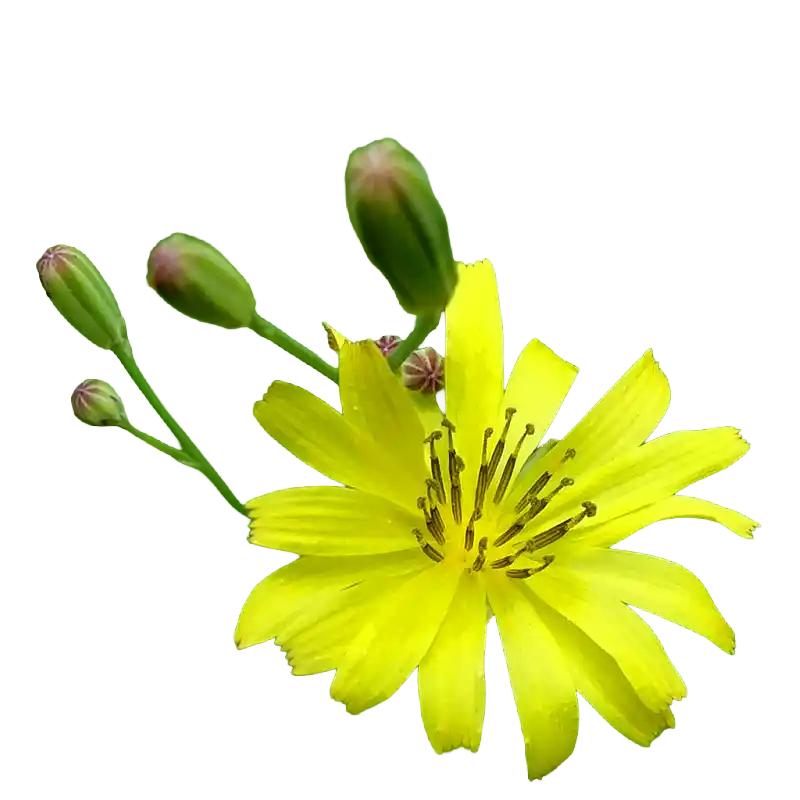
Introductionمقدّمة
Ixeris chinensis ('ku mai cai' — 'bitter-vegetable') is a small bitter dandelion-like herb eaten as a wild green and used in Chinese medicine to 'clear heat and resolve toxicity' — for sores, boils, sore throat, infections and 'hot' inflammatory conditions. Its sesquiterpene lactones and flavonoids give anti-inflammatory, antioxidant and antimicrobial activity.الإكسِيرِس الصينية (Ixeris chinensis، «كو ماي تساي» — «الخضار المرّة») عشبةٌ صغيرة مرّة تشبه الهندباء تُؤكل خضاراً برّية وتُستعمل في الطبّ الصيني «لتنقية الحرارة وحلّ السميّة» — للقروح والدمامل والتهاب الحلق والعدوى والحالات «الحارّة» الالتهابية. ولاكتوناتها السيسكويتربينية وفلافونويداتها تمنح نشاطاً مضاداً للالتهاب والأكسدة والميكروبات.
Categoryالفئة
• Bitter heat-clearing edible herb (Asteraceae)
• 'Ku mai cai' — bitter 'clear-heat, detox' greens
• Anti-inflammatory & antioxidant (sesquiterpene lactones)
• Antimicrobial
• Traditional infection, sore & 'toxic-heat' herb• عشبة مرّة منقّية للحرارة صالحة للأكل (الفصيلة النجمية)
• «كو ماي تساي» — خضارٌ مرّة «منقّية للحرارة ومزيلة للسميّة»
• مضادّة للالتهاب والأكسدة (لاكتونات سيسكويتربينية)
• مضادّة للميكروبات
• عشبة تقليدية للعدوى والقروح و«الحرارة السامّة»
Habitatالموطن
A common low herb of fields, roadsides and waste ground across China and East Asia; the whole plant is eaten and used medicinally.عشبة منخفضة شائعة في الحقول وحواف الطرق والأراضي البور بالصين وشرق آسيا؛ يُؤكل النبات كاملاً ويُستعمل طبّياً.
Parts usedالأجزاء المستخدمة
• Whole plant (aerial parts & root)• النبات كامل (الأجزاء الهوائية والجذر)
Key constituentsالمكوّنات الفعّالة
• Sesquiterpene lactones (guaianolides)
• Flavonoids (luteolin, apigenin glycosides)
• Phenolic & caffeoylquinic acids
• Triterpenes
• Sterols• لاكتونات سيسكويتربينية (غوايانوليدات)
• فلافونويدات (لوتيولين، غليكوزيدات أبيجينين)
• أحماض فينولية وكافيويلكينيك
• تربينات ثلاثية
• ستيرولات
Researchالأبحاث
Ixeris chinensis is studied for anti-inflammatory, antioxidant and antimicrobial activity, with sesquiterpene lactones and flavonoids identified as active constituents; network-pharmacology and phytochemical work characterise its components and support the traditional 'clear-heat, resolve-toxicity' use. Evidence is preclinical, and it is used mainly as a wild food-medicine.تُدرَس الإكسِيرِس الصينية لنشاطٍ مضاد للالتهاب والأكسدة والميكروبات، مع تحديد لاكتونات سيسكويتربينية وفلافونويدات مركّباتٍ فعّالة؛ وتُوصّف أعمال الصيدلة الشبكية والكيمياء النباتية مكوّناتها وتدعم الاستعمال التقليدي «لتنقية الحرارة وحلّ السميّة». والأدلة أوّلية، وتُستعمل أساساً غذاءً-دواء برّياً.
Published researchأبحاث منشورة
Traditional useالاستخدام التقليدي
Bitter whole plant eaten fresh or decocted in Chinese folk medicine to 'clear heat and resolve toxicity', cool the blood and reduce swelling — for sores, boils and abscesses, sore inflamed throat, red eyes, hot dysentery and 'toxic-heat' skin conditions; also valued as a bitter spring vegetable to stimulate digestion.يُؤكل النبات المرّ كامل طازجاً أو يُغلى في الطبّ الشعبي الصيني «لتنقية الحرارة وحلّ السميّة» وتبريد الدم وتقليل التورّم — للقروح والدمامل والخرّاجات والتهاب الحلق واحمرار العين والزحار الحارّ وحالات الجلد «الحارّة السامّة»؛ ويُقدَّر خضاراً ربيعية مرّة لتنبيه الهضم.
Current useالاستخدام الحالي
A bitter edible 'clear-heat, detox' green (ku mai cai) with researched anti-inflammatory, antioxidant and antimicrobial activity.خضارٌ مرّة صالحة للأكل «منقّية للحرارة ومزيلة للسميّة» (كو ماي تساي) بنشاطٍ مدروس مضاد للالتهاب والأكسدة والميكروبات.
Preparationsالتحضيرات
• Fresh bitter greens
• Whole-plant decoction
• Poultice for sores (traditional)• خضار مرّة طازجة
• مغلي النبات الكامل
• لبخة للقروح (تقليدي)
Used for these conditionsيُستخدم لهذه الحالات
Adult dosageجرعة البالغين
Whole-plant decoction or fresh greens in modest traditional amounts per Chinese folk practice.مغلي النبات الكامل أو الخضار الطازجة بكميات تقليدية معتدلة بحسب الممارسة الشعبية الصينية.
Child dosageجرعة الأطفال
Small culinary amounts acceptable; medicinal use for children under guidance.كميات طهوية صغيرة مقبولة؛ والاستعمال العلاجي للأطفال بإرشاد.
Cautionتحذيرات
Bitter and cold, so heavy use may upset weak or cold digestions; best kept to moderate amounts or balanced formulas. As an Asteraceae plant it can cause allergy in sensitive people. Correctly identify the plant (several similar bitter greens exist) and wash well if foraged.مرّة وباردة، فالإكثار قد يزعج الهضم الضعيف أو البارد؛ والأفضل الاقتصار على كميات معتدلة أو خلطات متوازنة. وكنباتٍ نجميّ قد تُسبّب حساسية لدى القابلين. ويُعرَّف النبات بدقّة (توجد خضار مرّة شبيهة عدّة) ويُغسَل جيّداً إن جُمِع برّياً.
Pregnancy & nursingالحمل والرضاعة
Cold, heat-clearing herb — occasional culinary use is traditional, but avoid concentrated medicinal amounts in pregnancy without guidance.عشبة باردة منقّية للحرارة — الاستعمال الطهوي العَرَضي تقليدي، لكن تُتجنّب الكميات العلاجية المركّزة في الحمل دون إرشاد.


