Introductionمقدّمة
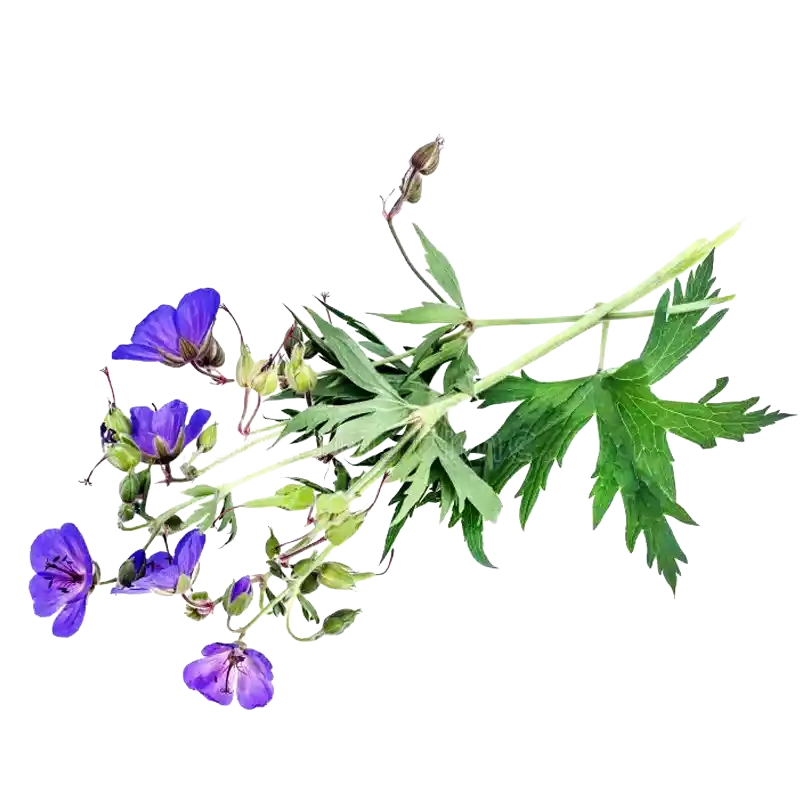
Geranium pratense (meadow cranesbill) is a blue-violet-flowered wild geranium whose tannin-rich root and leaves are used as an astringent for diarrhoea, bleeding, wounds and the mouth. Like other cranesbills it has antioxidant and astringent activity.إبرة الراعي المرجيّة (Geranium pratense) إبرة راعٍ برّية بنفسجية زرقاء الأزهار جذرها وأوراقها الغنيّة بالتانين تُستعمل قابضاً للإسهال والنزف والجروح والفم. وهي — كسائر إبر الراعي — ذات نشاطٍ مضاد للأكسدة وقابض.
Categoryالفئة
• Wild geranium — astringent herb
• Astringent (tannins)
• Antioxidant
• Anti-diarrhoeal (traditional)
• Wound & mouth use• إبرة راعٍ برّية — عشبة قابضة
• قابض (عفص)
• مضاد للأكسدة
• مضاد للإسهال (تقليدي)
• استعمال للجروح والفم
Habitatالموطن
A tall meadow perennial with large blue-violet flowers, in damp grassland and roadsides across Europe and temperate Asia.نبتةٌ مرجيّة مُعمّرة طويلة بأزهارٍ بنفسجية زرقاء كبيرة، في المروج الرطبة وحواف الطرق عبر أوروبا وآسيا المعتدلة.
Parts usedالأجزاء المستخدمة
• Root/rhizome
• Leaves
• Aerial parts• الجذر/الجذمور
• الأوراق
• الأجزاء الهوائية
Key constituentsالمكوّنات الفعّالة
• Tannins (ellagitannins)
• Flavonoids
• Phenolic acids
• Gallic acid• عفص (إيلاجيتانينات)
• فلافونويدات
• أحماض فينولية
• حمض الغاليك
Researchالأبحاث
Geranium species, including meadow cranesbill, are rich in astringent ellagitannins and antioxidant polyphenols, and studies of the genus document antioxidant, anti-inflammatory and tissue-tightening (astringent) activity — consistent with the traditional use for diarrhoea, bleeding, wounds and the mouth. Species-specific clinical data are limited.أنواع إبرة الراعي، ومنها المرجيّة، غنيّة بالإيلاجيتانينات القابضة والبوليفينولات المضادة للأكسدة، وتوثّق دراسات الجنس نشاطاً مضاداً للأكسدة والالتهاب وقابضاً للنسيج — بما يتّسق مع الاستعمال التقليدي للإسهال والنزف والجروح والفم. والبيانات السريرية الخاصّة بالنوع محدودة.
Published researchأبحاث منشورة
Traditional useالاستخدام التقليدي
Used in European folk medicine as an astringent for diarrhoea, dysentery and internal bleeding, a gargle for mouth and throat, and a wash and poultice for wounds and piles.تُستعمل في الطبّ الشعبي الأوروبي قابضاً للإسهال والزحار والنزف الداخلي، وغرغرةً للفم والحلق، وغسولاً ولبخةً للجروح والبواسير.
Current useالاستخدام الحالي
Used as an astringent tea/gargle and wound wash, like the related American cranesbill (Geranium maculatum).تُستعمل شاياً/غرغرةً قابضة وغسول جروح، كإبرة الراعي الأمريكية القريبة (Geranium maculatum).
Preparationsالتحضيرات
Root/leaf decoction, Gargle, Wound wash, Poulticeمغليّ جذر/ورق، غرغرة، غسول جروح، لبخة
Used for these conditionsيُستخدم لهذه الحالات
Adult dosageجرعة البالغين
Decoction of 1–2 g root/leaf per cup, short-term for diarrhoea, or as a gargle/wash.مغليّ 1–2 غ جذر/ورق للكوب، قصير الأمد للإسهال، أو غرغرةً/غسولاً.
Child dosageجرعة الأطفال
Mild use for children's diarrhoea only under guidance; external washes are gentle.الاستعمال الخفيف لإسهال الأطفال بإشراف فقط؛ والغسولات الخارجية لطيفة.
Cautionتحذيرات
High tannin content: strong or prolonged internal use can upset the stomach, cause constipation and reduce absorption of iron and medicines (take them hours apart). Best used short-term for acute diarrhoea and externally. Persistent or bloody diarrhoea needs medical care.محتوى عفصٍ عالٍ: قد يُزعِج الاستعمال الداخلي القويّ أو المطوّل المعدة ويسبّب إمساكاً ويقلّل امتصاص الحديد والأدوية (خُذها بفارق ساعات). والأفضل استعماله قصير الأمد للإسهال الحادّ وخارجياً. والإسهال المستمرّ أو الدموي يحتاج رعايةً طبية.
Pregnancy & nursingالحمل والرضاعة
External use is fine; avoid strong internal tannin doses in pregnancy.الاستعمال الخارجي مقبول؛ وتُتجنَّب جرعات التانين الداخلية القوية في الحمل.