
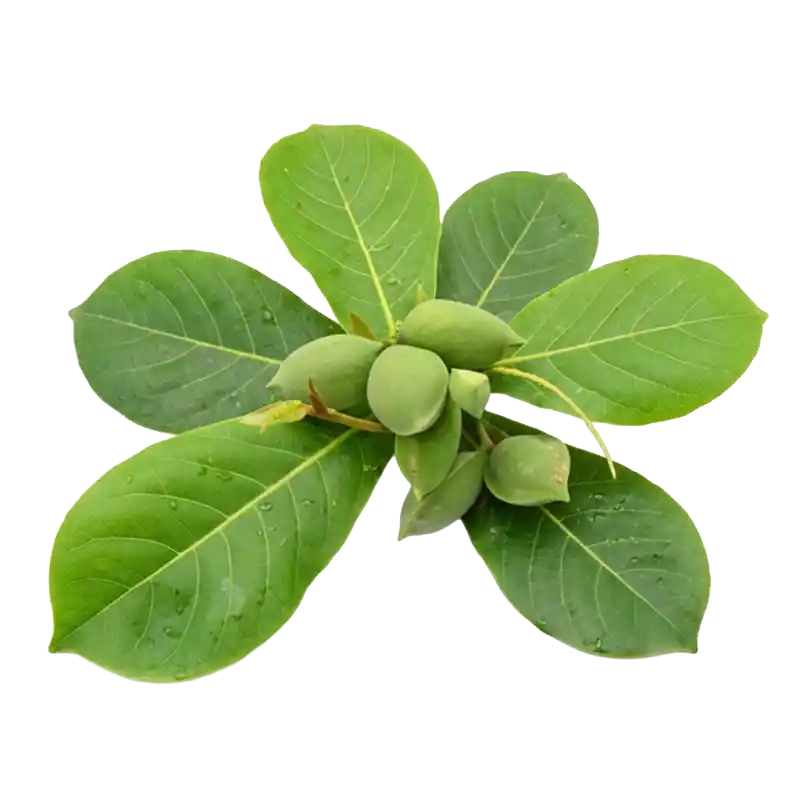
Introductionمقدّمة
Terminalia catappa — the tropical or Indian almond — is a large coastal tree whose tannin-rich leaves and bark are used across South and Southeast Asia, best studied for their antioxidant and liver-protective activity.التيرميناليا كاتابا — اللوز الاستوائي أو الهندي — شجرةٌ ساحلية كبيرة، تُستعمل أوراقها ولحايها الغنيّان بالعفص في جنوب آسيا وجنوبه شرقها، وأكثر ما دُرِست لفعاليتها المضادة للأكسدة والواقية للكبد.
Categoryالفئة
• Antioxidant
• Hepatoprotective
• Anti-inflammatory
• Antimicrobial
• Wound-healing• مضاد للأكسدة
• واقٍ للكبد
• مضاد للالتهاب
• مضاد للميكروبات
• مساعد على التئام الجروح
Habitatالموطن
Native to tropical Asia, Africa, Australia and the Pacific; a fast-growing seaside tree of sandy shores and roadsides, widely planted for shade.موطنها آسيا وإفريقيا وأستراليا والمحيط الهادئ، شجرة ساحلية سريعة النمو على الشواطئ الرملية وحواف الطرق، تُزرع كثيراً للظلّ.
Parts usedالأجزاء المستخدمة
• Leaves
• Bark
• Fruit / kernel• الأوراق
• اللحاء
• الثمرة ي البذرة
Key constituentsالمكوّنات الفعّالة
• Hydrolysable tannins (corilagin, punicalagin, punicalin)
• Flavonoids (quercetin, kaempferol)
• Triterpenoids
• Gallic & ellagic acids
• Saponins• عفص قابل للتحلّل (كوريلاجين، بونيكالاجين، بونيكالين)
• فلافونويدات (كيرسيتين، كامفيرول)
• ثلاثيات التربين
• حمضا الغاليك والإيلاجيك
• صابونينات
Researchالأبحاث
Laboratory and animal studies show the leaf tannins — especially corilagin and punicalagin — protect liver cells from chemical damage and act as strong antioxidants and anti-inflammatories; the leaves are also used in aquaculture for their antimicrobial effect. Human clinical evidence is still very limited.تُغعهللى دراسات المختبر والحيوان أنّه عفص الأوراق — خاصةً الكوريلاجين والبونيكالاجين — يحمي خلايا الكبد من الأذى الكيميائي ويعمل كمضادّّد، ويُستخدم التُستعمل الأوراق أيضاً في تربية الأحياء المائية لأثرها المضادّل للميكروبات. أمّا الأدلة السريرية البشرية فما زالت محدودة جداً.
Traditional useالاستخدام التقليدي
Leaves used for liver complaints, diarrhoea and dysentery, skin conditions and wounds; the bark as an astringent for mouth and throat, in Ayurvedic and Southeast Asian folk medicine.تُستعمل الأوراق لأمراض الكبد والإسهال والزحار وأمراض الجلد والجروح؛، واللحاء قابضاً للفم والحلق، في الطبّ الأيورفيدي والشعبيّ بجنوب آسيا.
Current useالاستخدام الحالي
Used as leaf decoctions or extracts and, popularly, as dried “catappa/almond leaves” to condition aquarium water. The edible kernel is eaten like an almond.تُستعمل كمغليّ أوراق أو مستخلصات، وشعبياً كأوراق «كاتابا/لوز» مجفّفة لتهيئة ماء الأحواض. وتُؤكل البذرة الصالحة للأكل كاللوز.
Preparationsالتحضيرات
Decoction, Extract, Dried leaf, Kernel (food)مغليّ، مستخلص، ورق مجفّ، بذرة (غذاء)
Used for these conditionsيُستخدم لهذه الحالات
Adult dosageجرعة البالغين
No standardised medicinal dose; use traditional leaf decoctions modestly and under guidance. Not established for internal therapeutic use.لا توجد جرعة دوائية مِعيارية؛ يُستعمل مغليّ الأوراق التقليدي باعتدال وبإرشاد. وغير مُثبَت للاستعمال العلاجي الداخلي.
Child dosageجرعة الأطفال
Not recommended as a medicine for children.لا يُنصَح به دواءً للأطفال.
Cautionتحذيرات
Generally low-risk in food or traditional amounts, but the leaves are very high in tannins, which in large or prolonged doses can upset the stomach, reduce iron absorption and stress the liver and kidneys. People with nut allergy should be cautious with the kernel.يُعدّ منخفض الخطورة بالكميات الغذائية أو التقليدية، لكنّ الأوراق غنيّة جداً بالعفص الذي قد يُسبّب بجرعاتٍ كبيرة أو مطوّلة اضطراباً معدياً ويقلّل امتصاص الحديد ويُجهد الكبد والكلى. وليَحذر أصحاب حساسية المكسّرات من البذرة.
Pregnancy & nursingالحمل والرضاعة
Avoid medicinal use in pregnancy and breastfeeding — not enough safety data.يُتجنَّب الاستعمال الدوائي في الحمل والرضاعة — بيانات السلامة غير كافية.


