Introductionمقدّمة
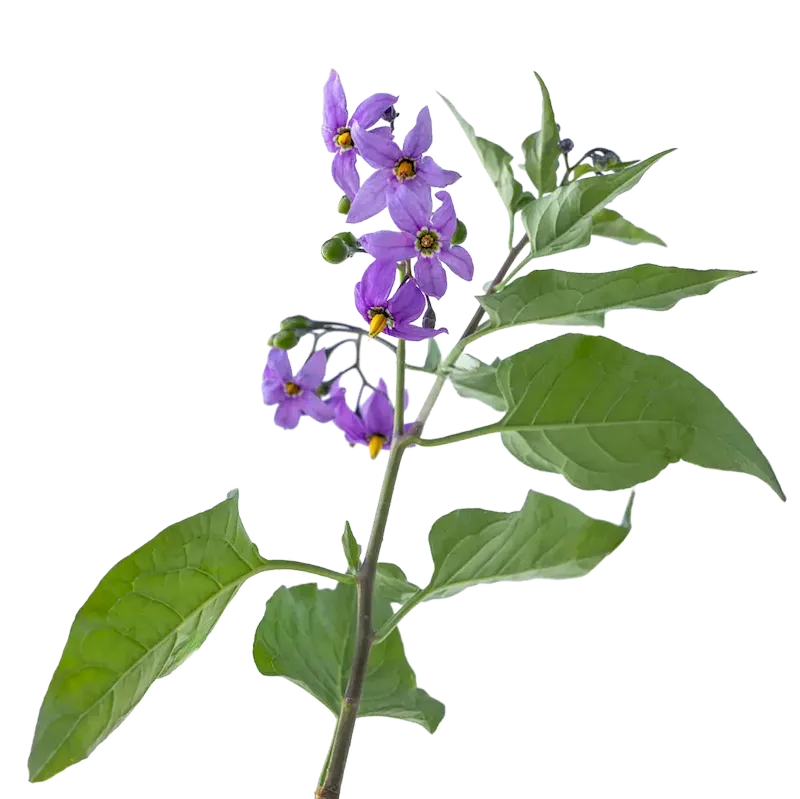
Common Nightshade, scientifically known as Solanum dulcamara, is a perennial woody vine belonging to the Solanaceae family. It is native to Europe and Asia but has become naturalized in various regions around the world. While it has a history of traditional use, Common Nightshade contains toxic compounds and should be used with caution. It is not typically used in modern herbal medicine.الباذنجان الشائع، المعروف علميًا باسم Solanum dulcamara، هو نبات متسلق خشبي معمر ينتمي إلى الفصيلة الباذنجانية. موطنه الأصلي أوروبا وآسيا، ولكنه استوطن مناطق مختلفة حول العالم. على الرغم من استخدامه التقليدي، إلا أن الباذنجان الشائع يحتوي على مركبات سامة، لذا يجب استخدامه بحذر. وهو غير شائع الاستخدام في الطب العشبي الحديث.
Categoryالفئة
• Limited traditional use for skin conditions and joint support
• Toxicity concerns limit its use• استخدام تقليدي محدود لعلاج الأمراض الجلدية ودعم المفاصل
• مخاوف السمية تحد من استخدامه
Habitatالموطن
Common Nightshade can be found in a variety of habitats, including moist woodlands, riverbanks, and disturbed areas. It is not cultivated for medicinal purposes but can be found growing in the wild. The plant contains toxic compounds, including solanine and solanidine, and should not be used without extreme caution. Historically, it has been used sparingly in traditional medicine for certain applications. The primary parts used are the stems and leaves, although they are not recommended for use due to toxicity. يُمكن العثور على نبات الباذنجان الشائع في بيئات متنوعة، تشمل الغابات الرطبة وضفاف الأنهار والمناطق المتضررة. لا يُزرع هذا النبات لأغراض طبية، ولكنه ينمو بريًا. يحتوي النبات على مركبات سامة، منها السولانين والسولانيدين، لذا يجب توخي الحذر الشديد عند استخدامه. تاريخيًا، استُخدم الباذنجان الشائع بشكل محدود في الطب التقليدي لبعض التطبيقات. الأجزاء الرئيسية المستخدمة هي السيقان والأوراق، مع أنها غير مُوصى بها للاستخدام نظرًا لسميتها.
Parts usedالأجزاء المستخدمة
• Stems (historical)
• Leaves (historical)• السيقان (تاريخية)
• الأوراق (تاريخية)
Key constituentsالمكوّنات الفعّالة
• Steroidal glycoalkaloids: mainly solanine, solamargine, solasonine and related solasodine/solanidine glycosides; these are concentrated especially in unripe fruits and aerial parts.
• Steroidal saponins: numerous tigogenin/diosgenin‑type steroidal saponins (e.g., degalactotigonin, uttroside B, nigrumnin‑I and other steroidal oligoglycosides).
• Polyphenols and flavonoids: phenolic acids (gallic, protocatechuic, gentisic, caffeic, m‑coumaric), flavonoids such as catechin, epicatechin, rutin, naringenin, luteolin, apigenin and kaempferol derivatives, plus tannins and proanthocyanidins.
• Polysaccharides: several structurally characterized polysaccharide fractions (SNL1–4, SNLBP, SNFP‑2‑1, SNFP‑3‑1) composed mainly of glucose, galactose, xylose, arabinose and mannose in various ratios.• جليكوألكالويدات ستيرويدية: تتكون أساسًا من السولانين، والسولامارجين، والسولاسونين، وجليكوسيدات السولاسودين/السولانيدين ذات الصلة؛ وتتركز هذه المركبات بشكل خاص في الثمار غير الناضجة والأجزاء الهوائية.
• صابونينات ستيرويدية: العديد من الصابونينات الستيرويدية من نوع تيوجينين/ديوسجينين (مثل ديجالاكتوتيجونين، وأوتروسيد ب، ونيجرومين-1، وغيرها من قليلات الجليكوسيدات الستيرويدية).
• بوليفينولات وفلافونويدات: أحماض فينولية (حمض الغاليك، وحمض البروتوكاتيكويك، وحمض الجنتيسيك، وحمض الكافيك، وحمض الكوماريك)، وفلافونويدات مثل الكاتشين، والإبيكاتشين، والروتين، والنارينجينين، واللوتولين، والأبيجينين، ومشتقات الكامفيرول، بالإضافة إلى التانينات والبروانثوسيانيدينات.
• السكريات المتعددة: العديد من أجزاء السكريات المتعددة ذات البنية المحددة (SNL1–4، SNLBP، SNFP‑2‑1، SNFP‑3‑1) تتكون أساسًا من الجلوكوز والجلاكتوز والزيلوز والأرابينوز والمانوز بنسب مختلفة.
Researchالأبحاث
Research on Common Nightshade primarily focuses on its toxic constituents, including solanine and solanidine, and their potential adverse effects. The plant is not recognized for its therapeutic properties in modern herbal medicine due to its toxicity.تركز الأبحاث المتعلقة بنبات الباذنجان الشائع بشكل أساسي على مكوناته السامة، بما في ذلك السولانين والسولانيدين، وآثارها الجانبية المحتملة. ولا يُعرف هذا النبات بخصائصه العلاجية في الطب العشبي الحديث بسبب سميته.
Published researchأبحاث منشورة
↗ Biological activity of alkaloids from Solanum dulcamara L.↗ Toxicity of nightshade berries (Solanum dulcamara) in miceTraditional useالاستخدام التقليدي
Historically, the stems and leaves of Common Nightshade have been used sparingly in traditional medicine for skin conditions and joint support. However, due to concerns regarding toxicity, it is not recommended for use. Its use in modern herbal medicine is extremely limited. تاريخياً، استُخدمت سيقان وأوراق نبات الباذنجان الشائع بشكل محدود في الطب التقليدي لعلاج الأمراض الجلدية ودعم المفاصل. إلا أنه نظراً للمخاوف المتعلقة بسميته، لا يُنصح باستخدامه. كما أن استخدامه في الطب العشبي الحديث محدود للغاية.
Current useالاستخدام الحالي
Common Nightshade stems and leaves have been used historically in traditional remedies for skin conditions and joint support. However, due to the plant's toxicity, its use is not recommended in modern herbal medicine. استُخدمت سيقان وأوراق نبات الباذنجان الشائع تاريخياً في العلاجات التقليدية لأمراض الجلد ودعم المفاصل. ومع ذلك، ونظراً لسمية هذا النبات، لا يُنصح باستخدامه في الطب العشبي الحديث.
Preparationsالتحضيرات
Variousمتنوع
Used for these conditionsيُستخدم لهذه الحالات
Adult dosageجرعة البالغين
Common Nightshade is not recommended for use in adults due to its toxicity. Its use in modern herbal medicine is extremely limited, and it should be avoided. Consult with a qualified healthcare provider if you have concerns about potential exposure or poisoning. لا يُنصح باستخدام نبات الباذنجان الشائع للبالغين نظرًا لسميته. استخدامه في الطب العشبي الحديث محدود للغاية، ويجب تجنبه. استشر طبيبًا مختصًا إذا كانت لديك مخاوف بشأن احتمالية التعرض له أو التسمم به.
Child dosageجرعة الأطفال
Common Nightshade is not recommended for use in children due to its toxicity. It should not be used without extreme caution, and consulting with a qualified healthcare provider is essential before considering any potential applications.لا يُنصح باستخدام نبات الباذنجان الشائع للأطفال نظرًا لسميته. يجب توخي الحذر الشديد عند استخدامه، ويُعدّ استشارة طبيب مختص أمرًا ضروريًا قبل التفكير في أي استخدامات محتملة له.
Cautionتحذيرات
Common Nightshade is highly toxic and should be avoided for all uses, including medicinal, culinary, and ornamental. The plant contains toxic compounds like solanine and solanidine, which can lead to severe health issues if ingested. It is essential to exercise extreme caution and not use Common Nightshade for any purpose. نبات الباذنجان الشائع شديد السمية، ويجب تجنبه تمامًا في جميع الاستخدامات، بما في ذلك الاستخدامات الطبية والغذائية والزينة. يحتوي هذا النبات على مركبات سامة مثل السولانين والسولانيدين، والتي قد تؤدي إلى مشاكل صحية خطيرة في حال تناولها. لذا، من الضروري توخي الحذر الشديد وعدم استخدام الباذنجان الشائع لأي غرض كان.
Pregnancy & nursingالحمل والرضاعة
Contraindicated in pregnancy and breastfeeding. This is a toxic plant containing steroidal glycoalkaloids and must not be ingested during pregnancy or lactation.يُمنع استخدامه أثناء الحمل والرضاعة. هذا نبات سام يحتوي على جليكوألكالويدات ستيرويدية ويجب عدم تناوله خلال فترة الحمل أو الإرضاع.