Introductionمقدّمة
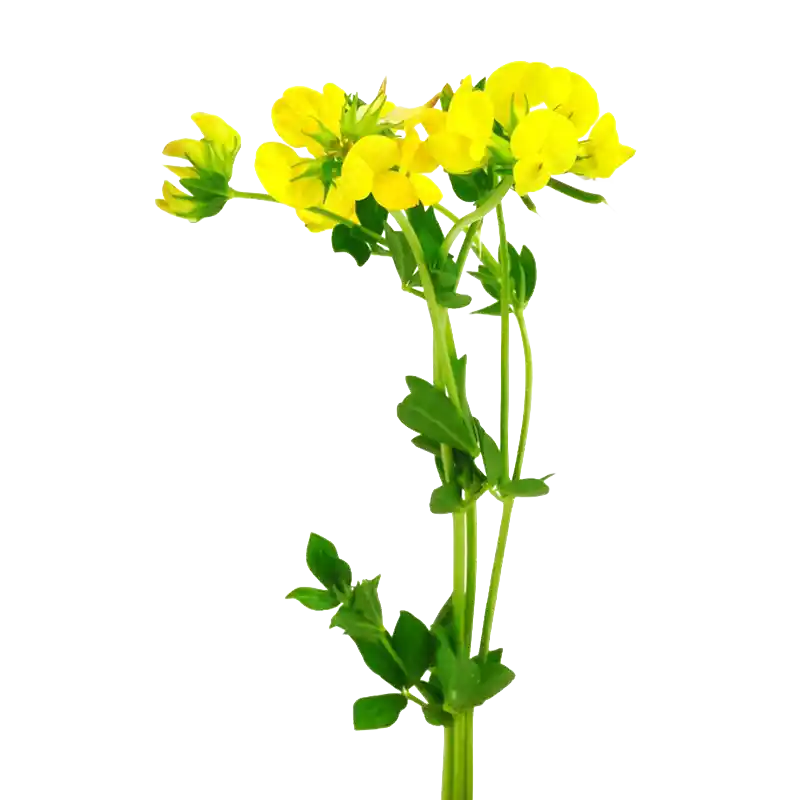
Lotus corniculatus (bird's-foot trefoil, 'eggs and bacon') is a common yellow-flowered meadow legume and valuable forage/pollinator plant. In folk medicine its flowers were used as a mild sedative and antispasmodic for anxiety and cramps, and the tannin-rich herb as an astringent. CAUTION: it contains small amounts of cyanogenic glycosides, so it should not be eaten raw in quantity.قرن الغزال (Lotus corniculatus) بقلٌ مرجيّ صفراء الزهر شائع ونبتة علفٍ/ملقِّحات قيّمة. وفي الطبّ الشعبي استُعملت أزهاره مهدّئاً خفيفاً ومضاداً للتقلّص للقلق والمغص، والعشبة الغنية بالتانين قابضاً. تنبيه: يحوي كميات صغيرة من الغليكوزيدات السيانوجينية، فلا يُؤكَل نيّئاً بكمية.
Categoryالفئة
• Yellow pea legume (Fabaceae)
• Sedative & antispasmodic (flowers — traditional)
• Antioxidant & antidiarrhoeal (tannins)
• Forage legume & pollinator plant
• ⚠️ Trace cyanogenic glycosides — don't eat raw in quantity• بقلة بازلاء صفراء (فصيلة البقول)
• مهدّئة ومضادّة للتقلّص (الأزهار — تقليدي)
• مضادّة للأكسدة ومضادّة للإسهال (تانينات)
• بقل علفٍ ونبتة ملقِّحات
• ⚠️ غليكوزيدات سيانوجينية أثرية — لا تُؤكَل نيّئة بكمية
Habitatالموطن
A low, spreading perennial legume with yellow (often red-tinged) pea-flowers and claw-like seed pods, of grassland, banks and roadsides across Europe and Asia.بقلٌ معمّر منخفض منتشر بأزهارٍ بازلائية صفراء (كثيراً مُحمرّة) وقرون بذرٍ كالمخلب، في المروج والضفاف وحواف الطرق عبر أوروبا وآسيا.
Parts usedالأجزاء المستخدمة
• Flowers
• Aerial parts (herb)• الأزهار
• الأجزاء الهوائية (العشبة)
Key constituentsالمكوّنات الفعّالة
• Flavonoids & tannins (condensed tannins)
• Cyanogenic glycosides (small amounts)
• Carotenoids
• Phenolic acids
• Saponins• فلافونويدات وتانينات (تانينات مكثّفة)
• غليكوزيدات سيانوجينية (كميات صغيرة)
• كاروتينويدات
• أحماض فينولية
• صابونينات
Researchالأبحاث
Lotus corniculatus is documented for flavonoids and condensed tannins (of agricultural interest for their anti-bloat and anthelmintic effects in grazing animals) with antioxidant activity, and its flowers have a traditional sedative/antispasmodic reputation. It also contains trace cyanogenic glycosides. Human medicinal evidence is preclinical/ethnobotanical; it is valued more as forage than as a medicine.قرن الغزال موثّقٌ بفلافونويدات وتانينات مكثّفة (ذات اهتمامٍ زراعي لآثارها المضادة للنفخة والطاردة للديدان في الحيوانات الراعية) بنشاطٍ مضاد للأكسدة، ولأزهاره سُمعةٌ تقليدية مهدّئة/مضادّة للتقلّص. ويحوي أيضاً غليكوزيدات سيانوجينية أثرية. والدليل الطبي البشري قبل سريري/إثنوبوتاني؛ ويُقدَّر علفاً أكثر من كونه دواءً.
Published researchأبحاث منشورة
Traditional useالاستخدام التقليدي
Flowers used as a mild sedative and antispasmodic tea for anxiety, restlessness, nervous tension, insomnia and cramps, the herb as an astringent for diarrhoea and on wounds/inflamed skin, and traditionally as a gentle heart/'calming' remedy; also a prized forage legume.تُستعمل الأزهار مهدّئاً خفيفاً ومضاداً للتقلّص شاياً للقلق والأرق والتوتّر العصبي والمغص، والعشبة قابضاً للإسهال وعلى الجروح/الجلد الملتهب، وتقليدياً علاجاً لطيفاً للقلب/«مُهدّئاً»؛ وأيضاً بقل علفٍ مُقدَّر.
Current useالاستخدام الحالي
Used occasionally as a mild sedative/astringent folk herb; chiefly valued as a forage and pollinator plant.يُستعمل أحياناً عشبةً شعبية مهدّئة/قابضة لطيفة؛ ويُقدَّر أساساً نبتة علفٍ وملقِّحات.
Preparationsالتحضيرات
• Flower infusion (calming tea)
• Astringent wash (skin)
• Forage legume• نقيع الأزهار (شاي مُهدّئ)
• غسول قابض (للجلد)
• بقل علف
Used for these conditionsيُستخدم لهذه الحالات
Adult dosageجرعة البالغين
Flower infusion 1–2 g in hot water as a calming tea; per traditional practice — avoid eating the raw plant in quantity.نقيع الأزهار 1–2 غ في ماءٍ حارّ شاياً مُهدّئاً؛ بحسب الممارسة التقليدية — ويُتجنَّب أكل النبتة النيّئة بكمية.
Child dosageجرعة الأطفال
A very weak calming tea occasionally for older children; avoid the raw plant.شايٌ مُهدّئ خفيف جداً أحياناً للأطفال الأكبر؛ ويُتجنَّب النبات النيّئ.
Cautionتحذيرات
⚠️ Contains small amounts of cyanogenic glycosides (which release cyanide when the plant is crushed/wilted), so do not eat it raw in quantity; drying and brewing as a tea greatly reduce the risk. Use it as a gentle flower tea, not a food, and use cautiously with sedative medicines. Wilted plant material is riskier for livestock too.⚠️ يحوي كميات صغيرة من الغليكوزيدات السيانوجينية (التي تُطلِق السيانيد عند سحق/ذبول النبتة)، فلا يُؤكَل نيّئاً بكمية؛ والتجفيف والتخمير شاياً يقلّلان الخطر كثيراً. ويُستعمل شاي أزهارٍ لطيفاً لا غذاءً، وبحذرٍ مع أدوية التهدئة. والمادّة الذابلة أخطر على الماشية أيضاً.
Pregnancy & nursingالحمل والرضاعة
Avoid medicinal doses in pregnancy — not established as safe (cyanogenic content, sedative).تُتجنَّب الجُرَع الطبية في الحمل — غير مثبتة الأمان (محتوى سياتوجيني، مهدّئ).