Introductionمقدّمة
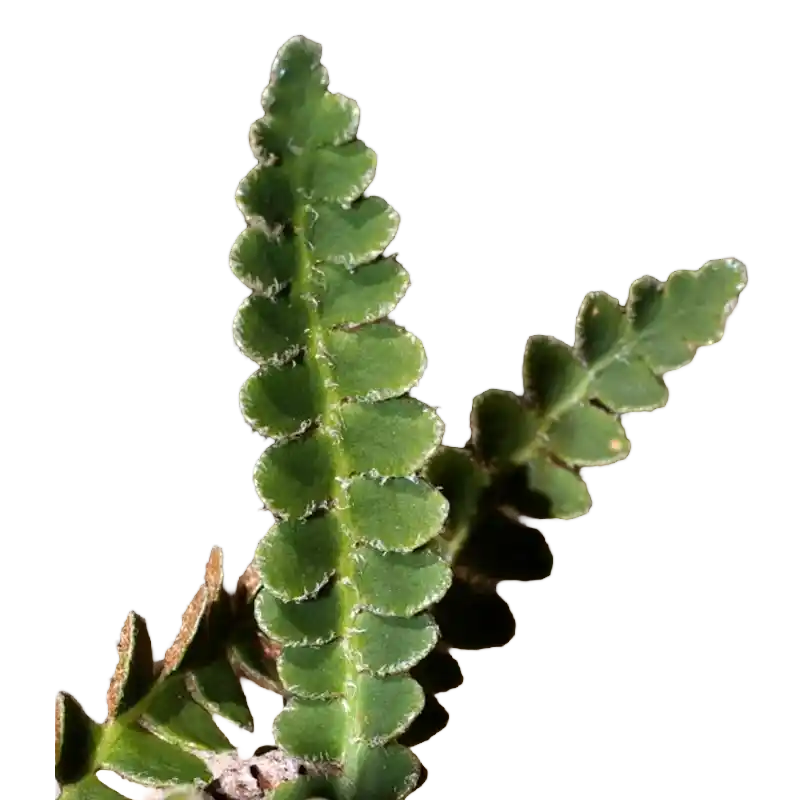
Ceterach officinarum (Asplenium ceterach, rustyback fern) is a small fern of old walls and rocks, with rusty scales beneath its leaves. Used in Mediterranean folk medicine as a diuretic, expectorant and for the spleen; its leaves are rich in antioxidant phenolics.سرخس الصدأ (Ceterach officinarum، وتُعرَف Asplenium ceterach) سرخسٌ صغير من الجدران القديمة والصخور، بحراشفَ صدئة تحت أوراقه. يُستعمل في الطبّ الشعبي المتوسّطي مُدرّاً ومُقشِّعاً وللطحال؛ وأوراقه غنيّة بالفينولات المضادة للأكسدة.
Categoryالفئة
• Small wall fern
• Diuretic / urinary (traditional)
• Antioxidant
• Expectorant (traditional)
• Astringent• سرخس جدرانٍ صغير
• مُدرّ/بوليّ (تقليدي)
• مضاد للأكسدة
• مُقشِّع (تقليدي)
• قابض
Habitatالموطن
A small evergreen fern growing in crevices of old walls, cliffs and limestone rocks across Europe and the Mediterranean.سرخسٌ صغير دائم الخُضرة ينمو في شقوق الجدران القديمة والجروف وصخور الكلس عبر أوروبا والمتوسّط.
Parts usedالأجزاء المستخدمة
• Fronds (whole herb)• السَّعَفات (العشبة كاملة)
Key constituentsالمكوّنات الفعّالة
• Flavonoids
• Phenolic acids (chlorogenic)
• Tannins
• Mucilage
• Xanthones• فلافونويدات
• أحماض فينولية (كلوروجينيك)
• عفص
• صمغ
• زانثونات
Researchالأبحاث
Phytochemical studies of rustyback fern report a rich flavonoid and phenolic profile with notable antioxidant activity, supporting its traditional use, and reviews document its diuretic, expectorant and astringent applications. Robust clinical data are lacking; use rests mainly on tradition.تذكر الدراسات الكيميائية لسرخس الصدأ محتوىً غنياً بالفلافونويد والفينول بنشاطٍ مضاد للأكسدة ملحوظ، بما يدعم استعماله التقليدي، وتوثّق المراجعات تطبيقاته المُدرّة والمُقشِّعة والقابضة. وتنقص البيانات السريرية المتينة؛ ويقوم الاستعمال على التقليد أساساً.
Published researchأبحاث منشورة
Traditional useالاستخدام التقليدي
Used around the Mediterranean as a diuretic for the urinary tract and stones, an expectorant for coughs, a remedy 'for the spleen' and jaundice, and an astringent.يُستعمل حول المتوسّط مُدرّاً للمسالك والحصى، ومُقشِّعاً للسعال، ودواءً «للطحال» واليرقان، وقابضاً.
Current useالاستخدام الحالي
Used as an herbal tea for the urinary tract and chest in traditional practice; a minor medicinal fern.يُستعمل شاياً عشبياً للمسالك والصدر في الممارسة التقليدية؛ سرخسٌ دوائيّ ثانوي.
Preparationsالتحضيرات
Frond infusion, Decoctionنقيع سَعَفات، مغليّ
Used for these conditionsيُستخدم لهذه الحالات
Adult dosageجرعة البالغين
Infusion of the dried fronds, roughly 1–2 g per cup, with plenty of water.نقيع السَّعَفات المجفّفة، نحو 1–2 غ للكوب، مع ماءٍ وفير.
Child dosageجرعة الأطفال
Not generally used for young children.لا يُستعمل عادةً لصغار الأطفال.
Cautionتحذيرات
Generally regarded as mild, but like all ferns it should not be eaten in large quantities, and safety data are limited. Drink plenty of water when using it as a diuretic. Correctly identify the fern.يُعدّ لطيفاً عموماً، لكن كسائر السراخس لا يُؤكَل بكمياتٍ كبيرة، وبيانات الأمان محدودة. اشرب ماءً وفيراً عند استعماله مُدرّاً. وتعرّف على السرخس بدقّة.
Pregnancy & nursingالحمل والرضاعة
Little data — avoid medicinal use in pregnancy.بياناتٌ قليلة — يُتجنَّب الاستعمال الدوائي في الحمل.