Introductionمقدّمة
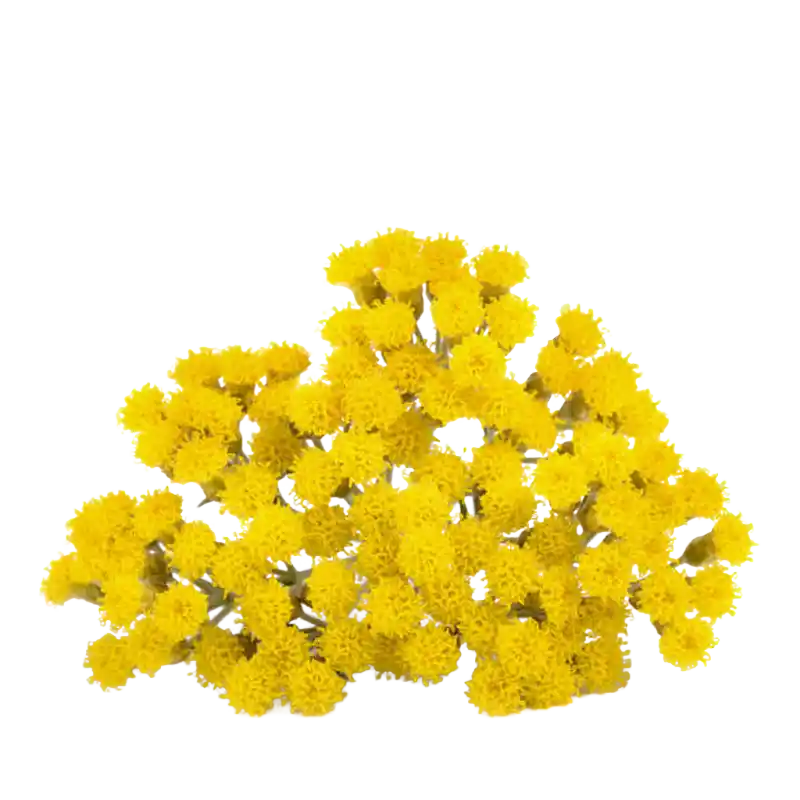
Helichrysum arenarium (sandy everlasting, immortelle) is a golden-flowered herb long used in European medicine to stimulate bile flow and support the liver and gallbladder and digestion. Its flavonoids give choleretic, antioxidant and anti-inflammatory activity.الخالدة الرملية (Helichrysum arenarium، زهرة الذهب) عشبةٌ ذهبية الأزهار طالما استُعملت في الطبّ الأوروبي لتنبيه تدفّق الصفراء ودعم الكبد والمرارة والهضم. وتمنحها فلافونويداتها نشاطاً مُدِرّاً للصفراء ومضاداً للأكسدة والالتهاب.
Categoryالفئة
• Golden 'immortelle' flower
• Choleretic — bile & liver support
• Antioxidant
• Anti-inflammatory
• Digestive• زهرة «الخالدة» الذهبية
• مُدِرٌّ للصفراء — دعمٌ للمرارة والكبد
• مضاد للأكسدة
• مضاد للالتهاب
• هاضم
Habitatالموطن
A woolly perennial with dense clusters of papery, long-lasting golden-yellow flowerheads, on dry sandy soils and pine heaths of Europe and West Asia.نبتةٌ مُعمّرة صوفية بعناقيد كثيفة من نوراتٍ ورقية ذهبية صفراء طويلة البقاء، في التربة الرملية الجافّة والأراضي الصنوبرية في أوروبا وغرب آسيا.
Parts usedالأجزاء المستخدمة
• Flowers (flowerheads)• الأزهار (النورات)
Key constituentsالمكوّنات الفعّالة
• Flavonoids (naringenin, apigenin, helichrysin)
• Dihydrochalcone glycosides
• Phenolic acids
• Essential oil
• Bitter compounds• فلافونويدات (نارينجينين، أبيجينين، هيليكريسين)
• غليكوزيدات ثنائي هيدروكالكون
• أحماض فينولية
• زيتٌ طيّار
• مركّبات مُرّة
Researchالأبحاث
Research documents Helichrysum arenarium flowers as a choleretic that increases bile flow and supports the liver, with strong antioxidant and anti-inflammatory activity from its flavonoids, and its dihydrochalcone glycosides even show enzyme-inhibiting (DPP-IV) activity of metabolic interest. This supports its traditional bile/liver and digestive uses; robust clinical trials are limited.يوثّق البحث أزهار الخالدة الرملية مُدِرّاً للصفراء يزيد تدفّقها ويدعم الكبد، بنشاطٍ قويّ مضاد للأكسدة والالتهاب من فلافونويداتها، بل تُظهِر غليكوزيدات ثنائي الهيدروكالكون فيها نشاطاً مثبّطاً للإنزيم (DPP-IV) مهمّاً أيضياً. وهذا يدعم استعمالاتها الصفراوية/الكبدية والهاضمة التقليدية؛ والتجارب السريرية المتينة محدودة.
Published researchأبحاث منشورة
Traditional useالاستخدام التقليدي
A classic European remedy to stimulate bile and treat gallbladder and liver sluggishness, gallstones and jaundice, for indigestion and bloating, and as a mild diuretic; the everlasting flowers are also used decoratively.دواءٌ أوروبيّ كلاسيكي لتنبيه الصفراء وعلاج كسل المرارة والكبد والحصى واليرقان، ولعُسر الهضم والانتفاخ، ومُدرّاً خفيفاً؛ وتُستعمل الأزهار الخالدة للزينة أيضاً.
Current useالاستخدام الحالي
Used in 'liver and gallbladder' herbal teas and digestive blends; a common ingredient in choleretic preparations.تُستعمل في شاي «الكبد والمرارة» العشبي وخلطات الهضم؛ مكوّنٌ شائع في تحضيرات إدرار الصفراء.
Preparationsالتحضيرات
Flower infusion, Decoction, Herbal blendنقيع أزهار، مغليّ، خلطة عشبية
Used for these conditionsيُستخدم لهذه الحالات
Adult dosageجرعة البالغين
Flower infusion of 2–3 g per cup, before or with meals, up to 3 times daily.نقيع أزهار 2–3 غ للكوب، قبل الطعام أو معه، حتى 3 مرات يومياً.
Child dosageجرعة الأطفال
Only under professional guidance.فقط بإشراف مختصّ.
Cautionتحذيرات
Because it stimulates bile flow, avoid it if you have gallstones blocking the bile duct or a bile-duct obstruction, where increased bile flow could be harmful — seek medical advice first. Generally well tolerated as a tea. It may add to other bile/liver or blood-sugar-affecting remedies.لأنها تُنبِّه تدفّق الصفراء، تجنّبها إن كان لديك حصىً تسدّ القناة الصفراوية أو انسدادٌ صفراوي، حيث قد يضرّ ازدياد تدفّق الصفراء — اطلب المشورة الطبية أولاً. جيّدة التحمّل عموماً شاياً. وقد تُضاف إلى علاجاتٍ أخرى للصفراء/الكبد أو مؤثّرة في سكر الدم.
Pregnancy & nursingالحمل والرضاعة
Avoid medicinal doses in pregnancy — bile-stimulating; not established as safe.تُتجنَّب الجرعات الدوائية في الحمل — مُنبِّهة للصفراء؛ غير مثبتة الأمان.