
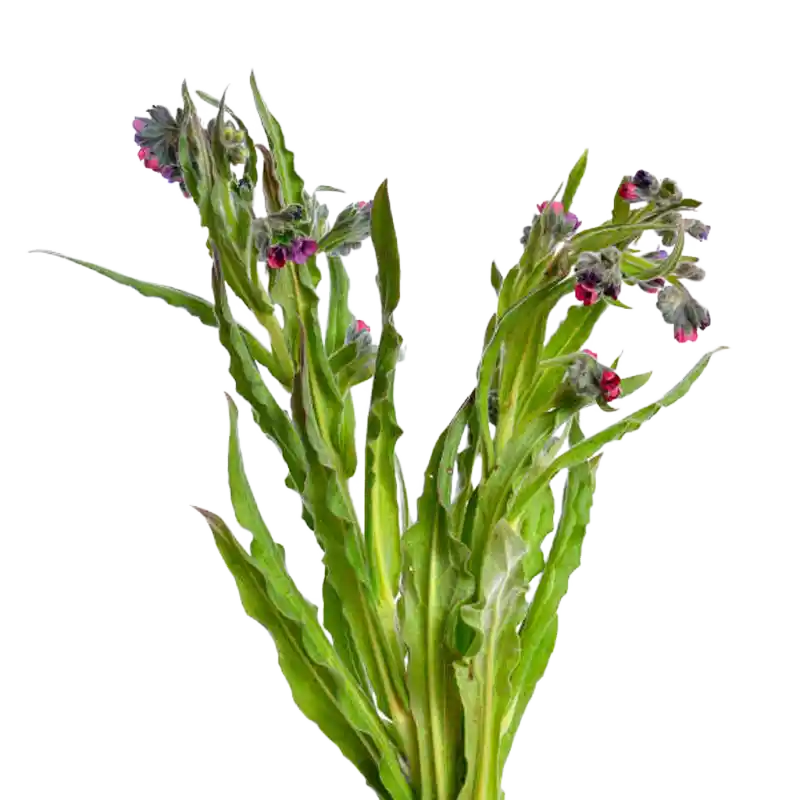
Introductionمقدّمة
Cynoglossum officinale (hound's-tongue) was used in old herbals as a wound and skin remedy and a sedative, but it contains toxic pyrrolizidine alkaloids that can damage the liver. Modern practice regards internal use as unsafe; this entry emphasises its toxicity.لسان الكلب (Cynoglossum officinale) استُعمل في الأعشاب القديمة دواءً للجروح والجلد ومُهدِّئاً، لكنه يحوي قلويدات بيروليزيدينية سامّة قد تُضِرّ بالكبد. وتعدّ الممارسة الحديثة الاستعمال الداخلي غير آمن؛ وهذه المدخلة تُبرِز سُميّته.
Categoryالفئة
• Traditional wound/skin herb
• CONTAINS TOXIC PYRROLIZIDINE ALKALOIDS
• Liver-damaging if taken internally
• External use only historically
• Included for safety information• عشبة جروحٍ/جلدٍ تقليدية
• تحوي قلويدات بيروليزيدينية سامّة
• مُضِرّة بالكبد عند البلع
• خارجيّ فقط تاريخياً
• مُدرَجة للمعلومة الأمنية
Habitatالموطن
A soft, grey-hairy biennial with dull reddish-purple flowers and burred nutlets, on dry grassland, dunes and waste ground; smells of mice.نبتةٌ ثنائية الحول ناعمة رمادية الزَّغب بأزهارٍ أرجوانية محمرّة باهتة وجُنيْبات شائكة، في المروج الجافّة والكثبان والأراضي البور؛ رائحتها كالفئران.
Parts usedالأجزاء المستخدمة
• Root & leaves (external only, historically)• الجذر والأوراق (خارجيّ فقط، تاريخياً)
Key constituentsالمكوّنات الفعّالة
• Pyrrolizidine alkaloids (heliosupine, cynoglossine — toxic)
• Tannins
• Mucilage
• Allantoin• قلويدات بيروليزيدينية (هيليوسوبين، سينوغلوسين — سامّة)
• عفص
• صمغ
• ألانتوين
Researchالأبحاث
Hound's-tongue is well documented as a source of hepatotoxic pyrrolizidine alkaloids, which have caused liver poisoning in grazing animals; the same alkaloids make internal human use unsafe. It contains soothing allantoin and mucilage that account for its old external wound/skin use, but modern guidance is to avoid internal use entirely.يُوثَّق لسان الكلب مصدراً لقلويدات بيروليزيدينية سامّة للكبد سبّبت تسمّماً كبدياً في حيوانات الرعي؛ وهذه القلويدات نفسها تجعل الاستعمال البشري الداخلي غير آمن. ويحوي ألانتوين وصمغاً مُهدِّئين يفسّران استعماله الخارجي القديم للجروح/الجلد، لكن الإرشاد الحديث تجنّب الاستعمال الداخلي تماماً.
Published researchأبحاث منشورة
Traditional useالاستخدام التقليدي
Used in old European herbals externally as a poultice for wounds, burns, piles and skin, and formerly (unwisely) internally for coughs and as a sedative — a use now considered unsafe.استُعمل في الأعشاب الأوروبية القديمة خارجياً لبخةً للجروح والحروق والبواسير والجلد، وسابقاً (بلا حكمة) داخلياً للسعال ومُهدِّئاً — وهو استعمالٌ يُعدّ الآن غير آمن.
Current useالاستخدام الحالي
Not recommended for internal use; any use is limited to external, and even that is discouraged because of the alkaloids. Mainly of historical and safety interest.لا يُنصَح بالاستعمال الداخلي؛ وأيّ استعمالٍ يقتصر على الخارجي، وحتى ذلك يُثبَّط بسبب القلويدات. وهو ذو أهمية تاريخية وأمنية أساساً.
Preparationsالتحضيرات
External poultice (historical; use discouraged)لبخة خارجية (تاريخية؛ يُثبَّط استعمالها)
Used for these conditionsيُستخدم لهذه الحالات
Adult dosageجرعة البالغين
No safe internal dose — do not take internally.لا جرعة داخلية آمنة — لا يُؤخَذ داخلياً.
Child dosageجرعة الأطفال
Do not use for children.لا يُستعمل للأطفال.
Cautionتحذيرات
Contains hepatotoxic pyrrolizidine alkaloids — never take internally, as they can cause serious, cumulative liver damage. Avoid even prolonged external use on broken skin, where some absorption is possible. This entry is mainly to warn people away from internal use.يحوي قلويدات بيروليزيدينية سامّة للكبد — لا يُؤخَذ داخلياً أبداً، فقد تسبّب أذىً كبدياً خطيراً تراكمياً. وتجنّب حتى الاستعمال الخارجي المطوّل على الجلد المجروح حيث يُحتمَل بعض الامتصاص. وهذه المدخلة أساساً لتحذير الناس من الاستعمال الداخلي.
Pregnancy & nursingالحمل والرضاعة
Do not use in pregnancy — pyrrolizidine alkaloids are especially harmful to the liver and the baby.لا يُستعمل في الحمل — القلويدات البيروليزيدينية مؤذية خاصّةً للكبد والجنين.


