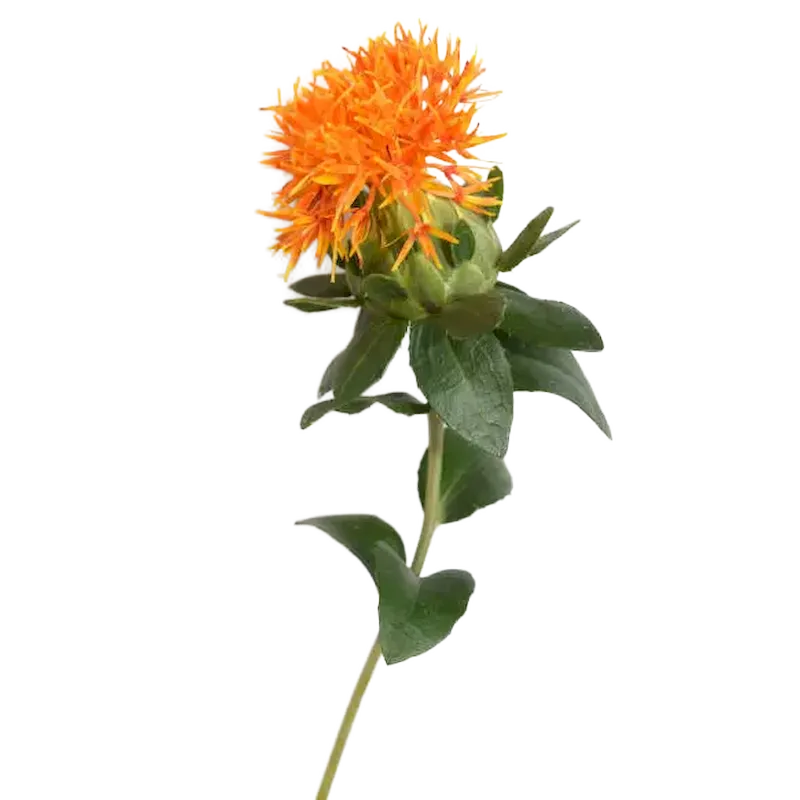
Introductionمقدّمة
Safflower, scientifically known as Carthamus tinctorius, is an annual plant that has been cultivated for centuries for various purposes. It belongs to the Asteraceae family and is known for its bright yellow or red flowers. Safflower has a history of traditional use and is valued for its seeds and oil, which have culinary, medicinal, and industrial applications.العصفر، المعروف علميًا باسم Carthamus tinctorius، نبات حولي يُزرع منذ قرون لأغراض متنوعة. ينتمي إلى الفصيلة النجمية (Asteraceae) ويُعرف بأزهاره الصفراء أو الحمراء الزاهية. للعصفر تاريخ طويل من الاستخدامات التقليدية، ويُقدّر لبذوره وزيته، اللذين يُستخدمان في الطهي والطب والصناعة.
Categoryالفئة
• Potential culinary oil
• Potential anti-inflammatory
• Traditional use for cardiovascular health• زيت طهي محتمل
• مضاد للالتهابات محتمل
• استخدام تقليدي لصحة القلب والأوعية الدموية
Habitatالموطن
Safflower is native to arid regions of Asia and is grown in several countries worldwide. It is cultivated for its seeds, which contain oil, and for its flowers, which are used as a natural dye. Safflower seeds are rich in oil and have a long history of use in cooking and traditional medicine. The oil is high in oleic acid and linoleic acid, making it suitable for various applications. يُعدّ العصفر من النباتات الأصلية في المناطق القاحلة من آسيا، ويُزرع في العديد من دول العالم. يُزرع العصفر لبذوره الغنية بالزيت، ولأزهاره التي تُستخدم كصبغة طبيعية. تتميز بذور العصفر بغناها بالزيت، ولها تاريخ طويل في الطهي والطب التقليدي. يحتوي الزيت على نسبة عالية من حمض الأوليك وحمض اللينوليك، مما يجعله مناسبًا لاستخدامات متنوعة.
Parts usedالأجزاء المستخدمة
• Seeds
• Flowers• بذور
• أزهار
Key constituentsالمكوّنات الفعّالة
• Fatty acids (seed oil: linoleic acid ~70–80%; oleic acid ~10–20% — cardiovascular, anti-inflammatory)
• Carthamin (flavonoid chalcone: red pigment ~0.2–0.5% petals — antioxidant, food/textile dye)
• Carthamone (yellow pigment: safflower yellow — antioxidant, colorant)
• Flavonoids (luteolin, quercetin, kaempferol — antioxidant, anti-inflammatory)
• Polysaccharides (immunomodulatory)
• Tocopherols (vitamin E ~34mg/100g oil — antioxidant)
• Phytosterols (beta-sitosterol — cholesterol-lowering)
• Minerals (calcium, iron, potassium — nutritive)• الأحماض الدهنية (زيت البذور: حمض اللينوليك ~70-80%؛ حمض الأوليك ~10-20% - مفيد للقلب والأوعية الدموية، مضاد للالتهابات)
• الكارثامين (فلافونويد تشالكون: صبغة حمراء ~0.2-0.5% من البتلات - مضاد للأكسدة، صبغة غذائية/نسيجية)
• الكارثامون (صبغة صفراء: أصفر القرطم - مضاد للأكسدة، ملون)
• الفلافونويدات (لوتولين، كيرسيتين، كامفيرول - مضاد للأكسدة، مضاد للالتهابات)
• السكريات المتعددة (معدلة للمناعة)
• التوكوفيرولات (فيتامين هـ ~34 ملغ/100 غ زيت - مضاد للأكسدة)
• الفيتوستيرولات (بيتا سيتوستيرول - خافض للكوليسترول)
• المعادن (الكالسيوم، الحديد، البوتاسيوم - مغذية)
Researchالأبحاث
Research on safflower has explored its chemical composition, particularly the oil's fatty acid profile and carthamin content. Safflower oil is recognized for its potential culinary use, and flavonoids in safflower have been studied for their potential health benefits. Traditional use includes support for cardiovascular health.استكشفت الأبحاث التي أُجريت على القرطم تركيبه الكيميائي، ولا سيما تركيبة الأحماض الدهنية في الزيت ومحتواه من الكارثامين. يُعرف زيت القرطم بإمكانية استخدامه في الطهي، كما دُرست مركبات الفلافونويد الموجودة فيه لفوائدها الصحية المحتملة. تشمل الاستخدامات التقليدية دعم صحة القلب والأوعية الدموية.
Published researchأبحاث منشورة
↗ Carthamus tinctorius L.: a comprehensive review of its ethnomedicine, phytochemistry, pharmacology, and clinical applications↗ Medical uses of Carthamus tinctorius L. (Safflower): a comprehensive review from Traditional Medicine to Modern Medicine↗ Phytochemistry, pharmacology and medicinal properties of Carthamus tinctoriusTraditional useالاستخدام التقليدي
Safflower seeds are traditionally used for their oil, which is suitable for cooking and as a salad dressing. Safflower oil is also used as a carrier oil in aromatherapy. Safflower flowers are used as a natural dye in textiles. Additionally, safflower has been used in traditional medicine for various purposes. تُستخدم بذور القرطم تقليديًا لاستخراج زيتها، وهو مناسب للطهي وتتبيل السلطات. كما يُستخدم زيت القرطم كزيت ناقل في العلاج العطري. وتُستخدم أزهار القرطم كصبغة طبيعية في صناعة النسيج. بالإضافة إلى ذلك، يُستخدم القرطم في الطب الشعبي لأغراض متنوعة.
Current useالاستخدام الحالي
Safflower seeds are used to extract safflower oil, which can be used in cooking, as a carrier oil for aromatherapy, or in traditional remedies. Safflower flowers are primarily used as a natural dye for textiles. تُستخدم بذور القرطم لاستخراج زيت القرطم، الذي يُستخدم في الطهي، وكزيت ناقل للعلاج العطري، أو في العلاجات التقليدية. أما أزهار القرطم فتُستخدم بشكل أساسي كصبغة طبيعية للمنسوجات.
Preparationsالتحضيرات
Culinary, Extract, Oil, Whole (Fresh/Dried)زيت, طهي, كامل (طازج/مجفف), مستخلص جاف
Used for these conditionsيُستخدم لهذه الحالات
Adult dosageجرعة البالغين
Dosage recommendations for safflower oil can vary depending on culinary preferences and intended use. It is typically used in cooking and as a salad dressing in amounts that suit individual taste. تختلف توصيات جرعات زيت القرطم تبعاً للتفضيلات الطهوية والاستخدام المقصود. ويُستخدم عادةً في الطبخ وكصلصة للسلطة بكميات تناسب الذوق الشخصي.
Child dosageجرعة الأطفال
Safflower oil is generally safe for children when used in cooking or as a carrier oil for aromatherapy. Dosage recommendations for safflower oil can vary depending on culinary preferences.يُعد زيت القرطم آمناً بشكل عام للأطفال عند استخدامه في الطهي أو كزيت ناقل للعلاج العطري. وتختلف توصيات الجرعة لزيت القرطم تبعاً للتفضيلات الغذائية.
Cautionتحذيرات
Safflower oil is generally considered safe for most individuals when used as a culinary oil or in aromatherapy. However, individuals with safflower allergies should avoid it. If you have underlying health conditions or are taking medications, consult with a qualified healthcare provider before use. يُعتبر زيت القرطم آمناً بشكل عام لمعظم الأشخاص عند استخدامه كزيت طهي أو في العلاج العطري. مع ذلك، ينبغي على الأشخاص الذين يعانون من حساسية تجاه القرطم تجنبه. إذا كنت تعاني من أي مشاكل صحية أو تتناول أدوية، فاستشر طبيباً مختصاً قبل استخدامه.
Pregnancy & nursingالحمل والرضاعة
Culinary safflower oil in food amounts is considered acceptable. Avoid medicinal doses of safflower flower during pregnancy: the florets are a traditional emmenagogue/uterine stimulant and may promote uterine contractions. Also use caution during breastfeeding.يُعدّ زيت القرطم بكميات الطهي مقبولًا. تجنّبي الجرعات الدوائية من زهرة القرطم أثناء الحمل: فالأزهار مُنشّط تقليدي للطمث والرحم وقد تُحفّز تقلصات الرحم. ويُنصح بالحذر أيضًا أثناء الرضاعة.