
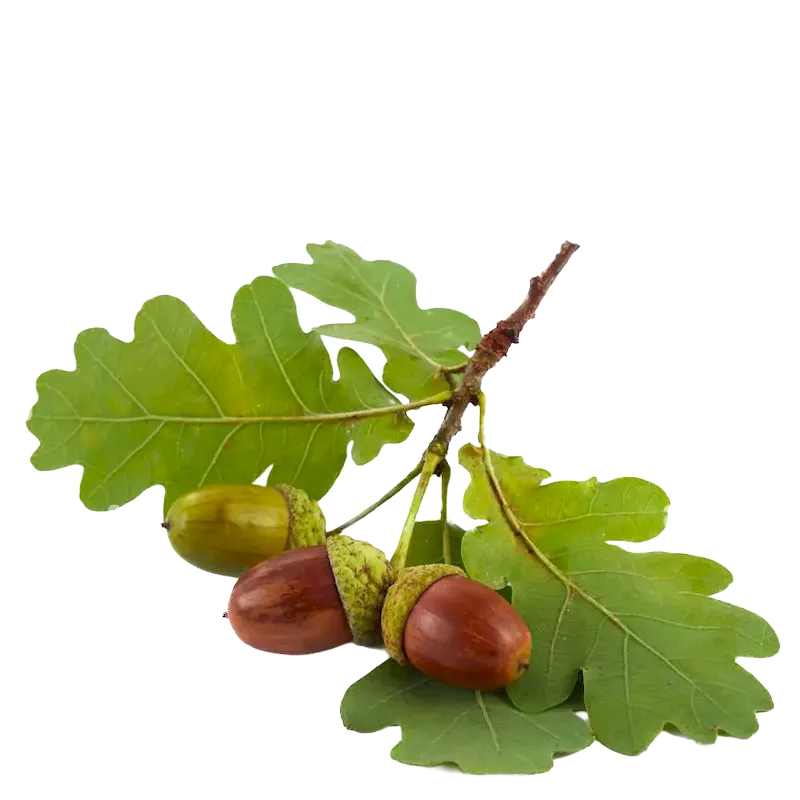
Introductionمقدّمة
The English Oak, scientifically known as Quercus robur, is a deciduous tree native to Europe and parts of Asia. It is a symbol of strength and endurance and has historical significance in various cultures. While not typically used as an herbal remedy, various parts of the oak tree have been used traditionally for their potential therapeutic properties. شجرة البلوط الإنجليزي، واسمها العلمي Quercus robur، هي شجرة نفضية موطنها الأصلي أوروبا وأجزاء من آسيا. وهي رمز للقوة والصمود، ولها أهمية تاريخية في ثقافات مختلفة. ورغم أنها لا تُستخدم عادةً كعلاج عشبي، إلا أن أجزاءً مختلفة من شجرة البلوط استُخدمت تقليديًا لخصائصها العلاجية المحتملة.
Categoryالفئة
• Traditional use for astringent properties
• Potential antioxidant effects• الاستخدام التقليدي لخصائصه القابضة
• التأثيرات المضادة للأكسدة المحتملة
Habitatالموطن
English Oak trees are commonly found in temperate regions of Europe and Asia. They prefer well-drained soils and can adapt to different climates. Different parts of the English Oak, including the bark, leaves, and acorns, contain various phytochemicals.تنتشر أشجار البلوط الإنجليزي في المناطق المعتدلة من أوروبا وآسيا. وهي تفضل التربة جيدة التصريف، وتستطيع التكيف مع مختلف المناخات. تحتوي أجزاء مختلفة من شجرة البلوط الإنجليزي، بما في ذلك اللحاء والأوراق والثمار، على مواد كيميائية نباتية متنوعة.
Parts usedالأجزاء المستخدمة
• Bark
• Leaves
• Acorns• اللحاء
• الأوراق
• ثمار البلوط
Key constituentsالمكوّنات الفعّالة
• Tannins (major group): 15–20% tannins in bark and up to about half of dry weight in galls, mainly hydrolysable ellagitannins and gallotannins, including gallic acid esters, grandinin/roburin E, castalagin, vescalagin, valoneic acid bilactone, monogalloyl-, di‑ and trigalloyl‑glucose, ellagic acid and its glycosides.
• Flavonoids and proanthocyanidins: catechin, gallocatechin, leucopelargonidin, luteoforol, quercitrin, kaempferol glycosides and other flavonoids plus condensed tannins/proanthocyanidins in bark and leaves.
• Phenolic acids: gallic and ellagic acids (and derivatives), plus quinic and other phenolic acids contributing to antioxidant properties.
• Triterpenoids (notably in heartwood): multiple oleanane-type triterpenoids, including roburgenic acid and related compounds.
• Other components: minor fatty acids, sterols and general phenolics present in small amounts compared to the dominant tannin fraction.
• التانينات (المجموعة الرئيسية): تشكل التانينات 15-20% من اللحاء، وتصل إلى نصف الوزن الجاف تقريبًا في العفص، وتتألف بشكل رئيسي من الإيلاجيتانينات والجالوتانينات القابلة للتحلل، بما في ذلك إسترات حمض الغاليك، والجراندينين/الروبورين E، والكاستالاجين، والفيسكالاجين، وحمض الفالونيك ثنائي اللاكتون، والجلوكوز أحادي الغالويل، وثنائي الغالويل، وثلاثي الغالويل، وحمض الإيلاجيك وجليكوسيداته.
• الفلافونويدات والبروانثوسيانيدينات: الكاتشين، والجالوكاشين، والليوكوبيلارجونيدين، واللوتيوفورول، والكيرسيترين، وجليكوسيدات الكامفيرول، وغيرها من الفلافونويدات، بالإضافة إلى التانينات/البروانثوسيانيدينات المكثفة في اللحاء والأوراق.
• الأحماض الفينولية: حمض الغاليك وحمض الإيلاجيك (ومشتقاتهما)، بالإضافة إلى حمض الكينيك وأحماض فينولية أخرى تساهم في خصائص مضادات الأكسدة.
• الترايتيربينويدات (خاصة في خشب القلب): ترايتيربينويدات متعددة من نوع الأوليانان، بما في ذلك حمض الروبورجينيك والمركبات ذات الصلة.
• مكونات أخرى: أحماض دهنية ثانوية، وستيرولات، ومركبات فينولية عامة موجودة بكميات قليلة مقارنة بجزء التانين السائد.
Researchالأبحاث
Research on English Oak has focused on its phytochemical constituents, including tannins, quercetin, and ellagic acid. While it is not a common herbal remedy, the tree's parts have been traditionally used for their astringent properties and potential antioxidant effects. ركزت الأبحاث على شجرة البلوط الإنجليزي على مكوناتها الكيميائية النباتية، بما في ذلك التانينات والكيرسيتين وحمض الإيلاجيك. ورغم أنها ليست علاجًا عشبيًا شائعًا، إلا أن أجزاء الشجرة تُستخدم تقليديًا لخصائصها القابضة وتأثيراتها المضادة للأكسدة المحتملة.
Published researchأبحاث منشورة
↗ Effect of the French oak wood extract Robuvit on markers of oxidative stress and activity of antioxidant enzymes in healthy volunteers: a pilot study↗ Robuvit (Quercus robur extract) supplementation in subjects with chronic fatigue syndrome and increased oxidative stress. A pilot registry study↗ Selected Plant Extracts Regulating the Inflammatory Immune Response and Oxidative Stress: Focus on Quercus roburTraditional useالاستخدام التقليدي
Various parts of the English Oak tree, such as the bark, leaves, and acorns, have been used in traditional remedies for their potential astringent properties. These parts may be prepared as decoctions or infusions for specific purposes. استُخدمت أجزاء مختلفة من شجرة البلوط الإنجليزي، كالقشرة والأوراق والثمار، في العلاجات التقليدية لما لها من خصائص قابضة محتملة. ويمكن تحضير هذه الأجزاء على شكل مغلي أو منقوع لأغراض محددة.
Current useالاستخدام الحالي
Different parts of the English Oak tree, including the bark, leaves, and acorns, have been historically used in various traditional preparations. These may include decoctions or infusions for specific applications. استُخدمت أجزاء مختلفة من شجرة البلوط الإنجليزي، بما في ذلك اللحاء والأوراق والثمار، تاريخياً في العديد من المستحضرات التقليدية. وقد تشمل هذه المستحضرات مغليّات أو مشروبات لأغراض محددة.
Preparationsالتحضيرات
Decoction, Infusionمغلي, منقوع
Used for these conditionsيُستخدم لهذه الحالات
Adult dosageجرعة البالغين
Dosage recommendations for English Oak may vary depending on the specific preparation and intended use. It is not commonly used as a primary herbal remedy but rather for symbolic or cultural significance.قد تختلف توصيات الجرعات لنبات البلوط الإنجليزي تبعًا لنوع التحضير والاستخدام المقصود. ولا يُستخدم عادةً كعلاج عشبي أساسي، بل لأغراض رمزية أو ثقافية.
Child dosageجرعة الأطفال
Not typically recommended for use in children as an herbal remedy. لا يُنصح عادةً باستخدامه كعلاج عشبي للأطفال.
Cautionتحذيرات
English Oak is generally considered safe when used in traditional cultural contexts or as a symbolic plant. However, it is not a mainstream herbal remedy, and caution should be exercised when considering any potential therapeutic use. يُعتبر البلوط الإنجليزي آمناً بشكل عام عند استخدامه في السياقات الثقافية التقليدية أو كنبات رمزي. ومع ذلك، فهو ليس علاجاً عشبياً شائعاً، وينبغي توخي الحذر عند التفكير في أي استخدام علاجي محتمل له.