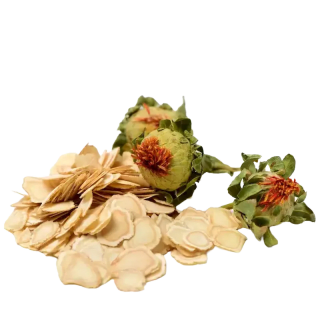
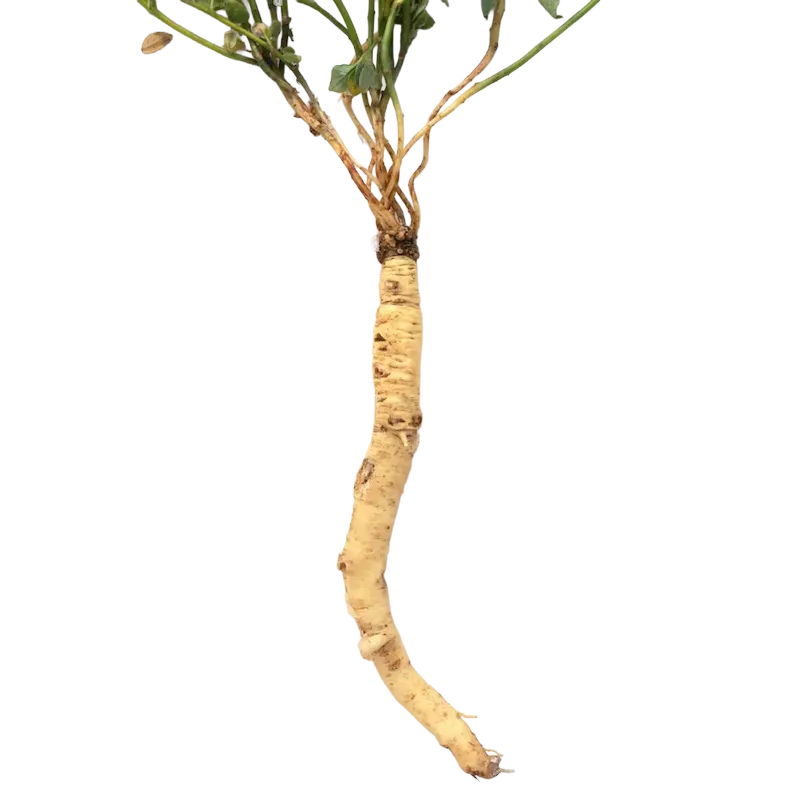
Introductionمقدّمة
Codonopsis, commonly known as 'poor man's ginseng,' is valued in traditional Chinese medicine for its adaptogenic properties. يُعتبر نبات الكودونوبسيس، المعروف باسم "جينسنغ الفقراء"، ذا قيمة في الطب الصيني التقليدي لخصائصه المُكيّفة.
Categoryالفئة
• Adaptogenic
• Immune-boosting
• Tonic
• Digestive aid• مُكيّف
• مُعزز للمناعة
• مُقوٍّ
• مُساعد للهضم
Habitatالموطن
Native to East Asia, it grows in forest margins and shrubby areas, preferring well-drained soil. موطنها الأصلي شرق آسيا، وتنمو على أطراف الغابات والمناطق الشجرية، وتفضل التربة جيدة التصريف.
Parts usedالأجزاء المستخدمة
• Root • جذر
Key constituentsالمكوّنات الفعّالة
• Polysaccharides (codonopsis polysaccharides — primary immunomodulatory compounds)
• Saponins (tangshenosides I, II, III, IV)
• Alkaloids (perlolyrine, codonopsine, codonopsinine)
• Triterpenoids (taraxerol, friedelin)
• Sterols (beta-sitosterol, stigmasterol)
• Phenolic acids (ferulic acid, syringic acid)
• Flavonoids (luteolin, rutin)
• Fructose oligosaccharides (inulin-type)
• Amino acids (gamma-aminobutyric acid, arginine)
• Essential oils
• Atractylenolide III
• Vitamins B1, B2
• Trace minerals (zinc, copper, iron)• عديدات السكاريد (عديدات سكاريد الكودونوبسيس - مركبات مناعية أساسية)
• الصابونين (تانغشينوسيدات I، II، III، IV)
• القلويدات (بيرلوليرين، كودونوبسين، كودونوبسينين)
• التريتربينويدات (تاراكسيرول، فريديلين)
• الستيرولات (بيتا-سيتوستيرول، ستيغماستيرول)
• الأحماض الفينولية (حمض الفيروليك، حمض السيرينجيك)
• الفلافونويدات (لوتولين، روتين)
• قليل السكاريد الفركتوز (من نوع الإينولين)
• الأحماض الأمينية (حمض غاما-أمينوبيوتيريك، أرجينين)
• الزيوت العطرية
• أتراكتيلينوليد III
• فيتامينات B1، B2
• المعادن النادرة (الزنك، النحاس، الحديد)
Researchالأبحاث
Codonopsis research centers on its potential adaptogenic and immune-boosting properties, often used in traditional medicine for enhancing stamina, reducing fatigue, and supporting the immune system. تركز أبحاث نبات الكودونوبسيس على خصائصه المحتملة في التكيف وتعزيز المناعة، والتي تستخدم غالبًا في الطب التقليدي لتعزيز القدرة على التحمل، وتقليل التعب، ودعم جهاز المناعة.
Published researchأبحاث منشورة
↗ A systematic review of the mechanism of action and potential medicinal value of codonopsis pilosula in diseases↗ Codonopsis Radix: A comprehensive review for its ethnopharmacology, phytochemistry, pharmacodynamics, pharmacokinetics, toxicity and potential clinical applications↗ A review of the botany, ethnopharmacology, phytochemistry, analysis method and quality control, processing methods, pharmacological effects, pharmacokinetics and toxicity of codonopsis radixTraditional useالاستخدام التقليدي
Used to enhance stamina, reduce stress, and improve digestive and respiratory health. يُستخدم لتعزيز القدرة على التحمل، وتقليل التوتر، وتحسين صحة الجهاز الهضمي والتنفسي.
Current useالاستخدام الحالي
Traditionally used in decoctions, teas, and extracts. Often included in herbal blends. يُستخدم تقليدياً في المغليات والشاي والمستخلصات. وغالباً ما يُضاف إلى الخلطات العشبية.
Preparationsالتحضيرات
Decoction, Extract, Teaشاي, مستخلص جاف, مغلي
Used for these conditionsيُستخدم لهذه الحالات
Adult dosageجرعة البالغين
Dosage varies; typically part of a prescribed herbal blend or formula. تختلف الجرعة؛ وعادة ما تكون جزءًا من مزيج أو تركيبة عشبية موصوفة.
Child dosageجرعة الأطفال
Not commonly used for children; consult a healthcare provider. لا يُستخدم عادةً للأطفال؛ استشر مقدم الرعاية الصحية.
Cautionتحذيرات
Generally considered safe; best used under guidance of a healthcare professional. يُعتبر آمناً بشكل عام؛ ويُفضل استخدامه تحت إشراف أخصائي رعاية صحية.