
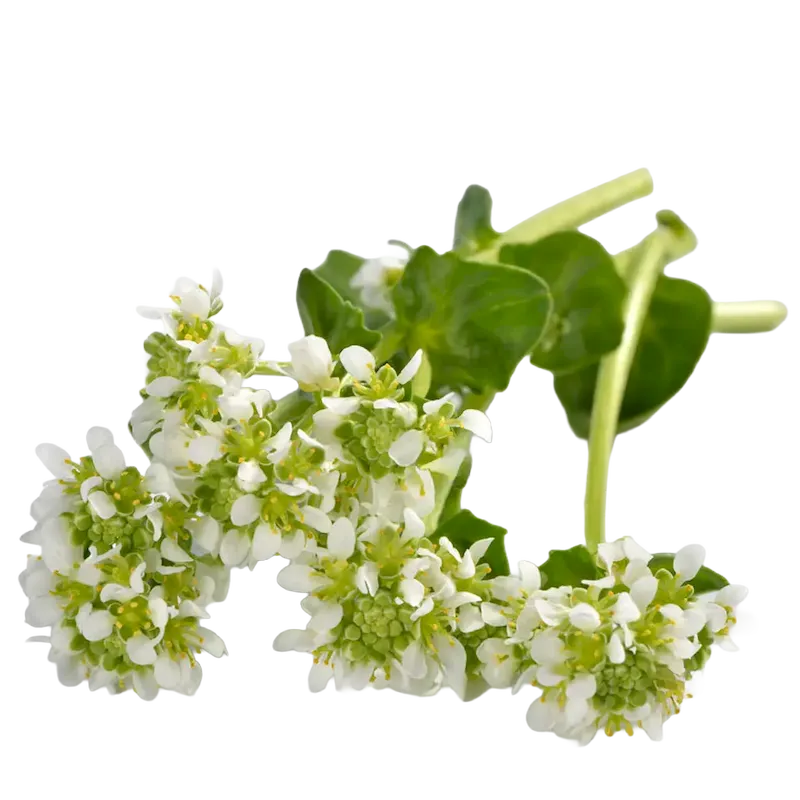
Introductionمقدّمة
Scurvy Grass, scientifically known as Cochlearia officinalis, is a biennial herb native to coastal regions of Europe and Asia. It is renowned for its high vitamin C content and historical use in preventing and treating scurvy. عشبة الإسقربوط، واسمها العلمي Cochlearia officinalis، هي عشبة ثنائية الحول موطنها الأصلي المناطق الساحلية في أوروبا وآسيا. وتشتهر بمحتواها العالي من فيتامين سي واستخدامها التاريخي في الوقاية من داء الإسقربوط وعلاجه.
Categoryالفئة
• High vitamin C content
• Potential antioxidant
• Traditionally used for scurvy prevention• محتوى عالٍ من فيتامين سي
• مضاد أكسدة محتمل
• يستخدم تقليديًا للوقاية من داء الإسقربوط
Habitatالموطن
Scurvy Grass is typically found in coastal areas, especially in sandy or gravelly soils. It prefers the salt-laden air of coastal environments. The leaves of Scurvy Grass are the primary part used for their high vitamin C content and potential health benefits. ينمو نبات حشيشة الإسقربوط عادةً في المناطق الساحلية، وخاصةً في التربة الرملية أو الحصوية. ويفضل هذا النبات الهواء المشبع بالملح في البيئات الساحلية. وتُعد أوراق حشيشة الإسقربوط الجزء الرئيسي المستخدم لغناها بفيتامين سي وفوائدها الصحية المحتملة.
Parts usedالأجزاء المستخدمة
• Leaves
• Occasionally, the whole plant• الأوراق
• أحيانًا، النبات بأكمله
Key constituentsالمكوّنات الفعّالة
• Vitamin C (ascorbic acid — exceptionally high, ~333 mg/100g; primary antiscorbutic, antioxidant)
• Glucosinolates (glucocochlearin, sinigrin, glucoiberin — anti-cancer, antimicrobial)
• Isothiocyanates (allyl isothiocyanate — from glucosinolate hydrolysis; antimicrobial)
• Flavonoids (quercetin, kaempferol, isorhamnetin — anti-inflammatory, antioxidant)
• Phenolic acids (caffeic acid, chlorogenic acid — antioxidant)
• Carotenoids (beta-carotene, lutein — antioxidant, provitamin A)
• Minerals (potassium, calcium, iron, phosphorus — high; sulfur — from glucosinolates)
• Tannins (condensed tannins — astringent, antimicrobial)
• Saponins (trace — expectorant)
• Essential oils (allyl isothiocyanate — pungent, antimicrobial)
• Vitamin B complex (B1, B2, folate — metabolic support)
• Polysaccharides (mucilage — soothing, demulcent)• فيتامين ج (حمض الأسكوربيك - نسبة عالية جدًا، حوالي 333 ملغم/100 غرام؛ مضاد رئيسي لداء الإسقربوط، ومضاد للأكسدة)
• غلوكوزينولات (غلوكوكوليرين، سينغرين، غلوكويبيرين - مضاد للسرطان، ومضاد للميكروبات)
• إيزوثيوسيانات (أليل إيزوثيوسيانات - من تحلل الغلوكوزينولات؛ مضاد للميكروبات)
• فلافونويدات (كيرسيتين، كامفيرول، إيزورامنيتين - مضاد للالتهابات، ومضاد للأكسدة)
• أحماض فينولية (حمض الكافيين، حمض الكلوروجينيك - مضاد للأكسدة)
• كاروتينات (بيتا كاروتين، لوتين - مضاد للأكسدة، وبروفيتامين أ)
• معادن (بوتاسيوم، كالسيوم، حديد، فوسفور - نسبة عالية؛ كبريت - من الغلوكوزينولات)
• تانينات (تانينات مكثفة - قابض، ومضاد للميكروبات)
• صابونينات (كمية ضئيلة - مقشع)
• زيوت عطرية (أليل إيزوثيوسيانات) (لاذع، مضاد للميكروبات)
• فيتامينات المجموعة ب (ب1، ب2، حمض الفوليك - دعم التمثيل الغذائي)
• عديدات السكاريد (مادة صمغية - مهدئة، ملطفة)
Researchالأبحاث
While Scurvy Grass is known for its historical use in preventing and treating scurvy, there is limited modern research on its properties. It is traditionally employed for its vitamin C content and potential antioxidant effects.على الرغم من أن عشبة الإسقربوط معروفة باستخدامها التاريخي في الوقاية من داء الإسقربوط وعلاجه، إلا أن الأبحاث الحديثة حول خصائصها محدودة. ويُستخدم هذا النبات تقليدياً لمحتواه من فيتامين ج وتأثيراته المضادة للأكسدة المحتملة.
Published researchأبحاث منشورة
↗ Cochlearia officinalis s.l. (Scurvy Grass) in Northernmost Alaska↗ Tandemly repeated DNA sequences in Brassicaceae: a characterization of the sequences in Cochlearia officinalis and Isatis tinctoria↗ Suppression of multivalent formation by B chromosomes in natural and artificial autopolyploids of scurvy-grass (Cochlearia L.)Traditional useالاستخدام التقليدي
Scurvy Grass has a historical significance as a remedy for scurvy, a disease caused by vitamin C deficiency. While scurvy is rare today due to improved nutrition, Scurvy Grass may still be used for its potential vitamin C content and traditional value. يُعدّ عشب الإسقربوط ذا أهمية تاريخية كعلاج لداء الإسقربوط، وهو مرض ناتج عن نقص فيتامين سي. ورغم أن داء الإسقربوط نادر الحدوث اليوم بفضل تحسّن التغذية، إلا أنه لا يزال يُستخدم عشب الإسقربوط لاحتوائه على فيتامين سي وقيمته التقليدية.
Current useالاستخدام الحالي
Scurvy Grass leaves can be consumed fresh or used in salads and culinary dishes. In the past, it was used as a preventive and curative measure against scurvy during long sea voyages. يمكن تناول أوراق عشبة الإسقربوط طازجة أو استخدامها في السلطات والأطباق. في الماضي، كانت تُستخدم كإجراء وقائي وعلاجي ضد داء الإسقربوط خلال الرحلات البحرية الطويلة.
Preparationsالتحضيرات
Culinaryطهي
Used for these conditionsيُستخدم لهذه الحالات
Adult dosageجرعة البالغين
Dosage recommendations for Scurvy Grass may vary depending on the intended use and traditional practices. It is typically consumed as part of a balanced diet or used in culinary preparations.قد تختلف توصيات الجرعات لعشبة الإسقربوط تبعًا للاستخدام المقصود والممارسات التقليدية. وعادةً ما تُستهلك كجزء من نظام غذائي متوازن أو تُستخدم في تحضير الأطعمة.
Child dosageجرعة الأطفال
There are no specific dosage recommendations for children, as Scurvy Grass is not commonly used as a primary source of vitamin C in modern times. Ensure a balanced diet for children's nutritional needs. لا توجد توصيات محددة بشأن جرعات فيتامين سي للأطفال، إذ لا يُستخدم عشب الإسقربوط عادةً كمصدر رئيسي له في العصر الحديث. احرص على اتباع نظام غذائي متوازن يلبي احتياجات الأطفال الغذائية.
Cautionتحذيرات
Scurvy Grass is generally safe when consumed as food. However, individuals with allergies or sensitivities should exercise caution. Pregnant or breastfeeding individuals should consult a healthcare provider before using it medicinally. يُعدّ عشب الإسقربوط آمناً بشكل عام عند تناوله كغذاء. مع ذلك، ينبغي على الأشخاص الذين يعانون من الحساسية أو عدم تحمله توخي الحذر. كما ينبغي على الحوامل والمرضعات استشارة الطبيب قبل استخدامه لأغراض طبية.
Pregnancy & nursingالحمل والرضاعة
Avoid during Pregnancy/Nursingيمنع أثناء الحمل والرضاعة