
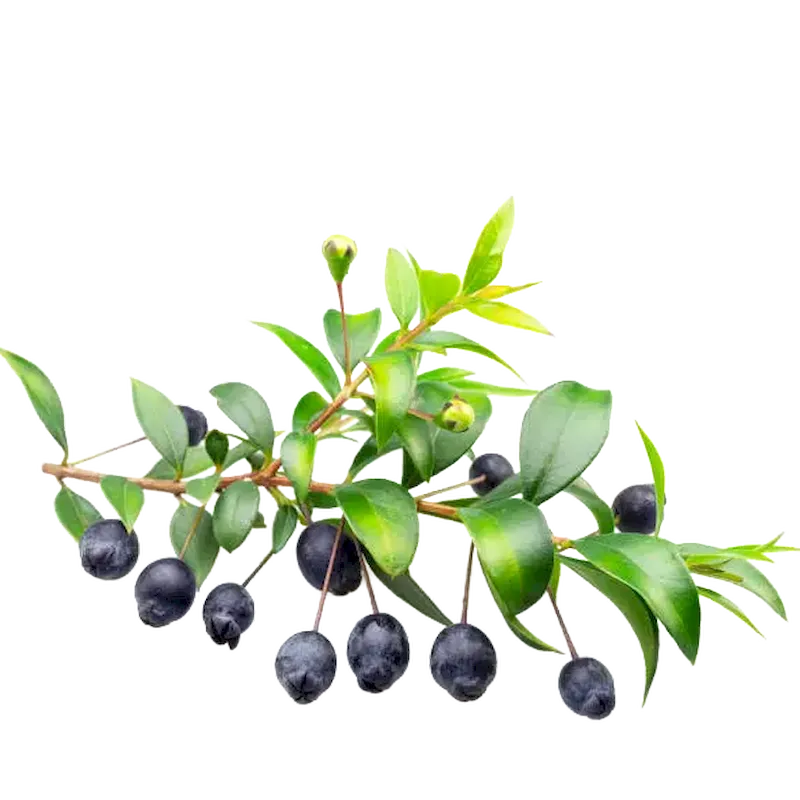
Introductionمقدّمة
Myrtle, scientifically known as Myrtus communis, is an evergreen shrub native to the Mediterranean region and parts of Asia. It is admired for its fragrant leaves and berries, which have been traditionally used for culinary and medicinal purposes. الآس، المعروف علمياً باسم Myrtus communis، هو شجيرة دائمة الخضرة موطنها الأصلي منطقة البحر الأبيض المتوسط وأجزاء من آسيا. ويُعجب به الناس لأوراقه وثماره العطرية، التي استُخدمت تقليدياً لأغراض الطهي والطب.
Categoryالفئة
• Potential astringent
• Potential anti-inflammatory
• Traditional use for respiratory health• قابض محتمل
• مضاد محتمل للالتهابات
• استخدام تقليدي لصحة الجهاز التنفسي
Habitatالموطن
Myrtle plants grow well in Mediterranean climates, often in dry or rocky soils. They are cultivated for their aromatic leaves and berries, which are used in various applications. Myrtle has a history of traditional use in culinary dishes, herbal remedies, and perfumery.تنمو نباتات الآس جيداً في مناخ البحر الأبيض المتوسط، غالباً في التربة الجافة أو الصخرية. تُزرع هذه النباتات لأوراقها وثمارها العطرية، والتي تُستخدم في تطبيقات متنوعة. وللآس تاريخ طويل من الاستخدام التقليدي في الطهي، والعلاجات العشبية، وصناعة العطور.
Parts usedالأجزاء المستخدمة
• Leaves
• Berries
• Essential oil• أوراق
• ثمار
• زيت عطري
Key constituentsالمكوّنات الفعّالة
• Essential oil monoterpenes (1,8‑cineole/eucalyptol; α‑pinene; limonene)
• Oxygenated monoterpenes/esters (myrtenyl acetate; linalool; linalyl acetate; terpinen‑4‑ol; myrtenol)
• Sesquiterpenes (α‑humulene; caryophyllene/caryophyllene oxide; germacrene D)
• Hydrolyzable tannins (gallotannins/ellagitannins; oenothein B; tellimagrandin-type)
• Phenolic acids (gallic acid; caffeic/chlorogenic derivatives)
• Flavonoids (myricetin and myricetin glycosides; quercetin-type)
• Anthocyanins (berries; peonidin‑3‑O‑glucoside and other berry pigments)• أحاديات التربين في الزيوت العطرية (1,8-سينول/أوكاليبتول؛ ألفا-بينين؛ ليمونين)
• أحاديات التربين/الإسترات المؤكسجة (أسيتات ميرتينيل؛ لينالول؛ أسيتات ليناليل؛ تربينين-4-أول؛ ميرتينول)
• سيسكويتربينات (ألفا-هيومولين؛ كاريوفيلين/أكسيد كاريوفيلين؛ جيرماكرين د)
• التانينات القابلة للتحلل (غالوتانينات/إيلاجيتانينات؛ أوينوثين ب؛ من نوع تيليماغراندين)
• الأحماض الفينولية (حمض الغاليك؛ مشتقات حمض الكافيين/الكلوروجينيك)
• الفلافونويدات (ميريسيتين وجليكوسيدات ميريسيتين؛ من نوع كيرسيتين)
• الأنثوسيانين (التوت؛ بيونيدين-3-O-جلوكوزيد وأصباغ التوت الأخرى)
Researchالأبحاث
Research on Myrtle has primarily focused on its essential oil, containing compounds like myrtenol, and its potential astringent and anti-inflammatory effects. It is traditionally used for respiratory health and has been studied for its therapeutic properties.ركزت الأبحاث على نبات الآس بشكل أساسي على زيته العطري، الذي يحتوي على مركبات مثل الميرتينول، وتأثيراته القابضة والمضادة للالتهابات. ويُستخدم تقليدياً لصحة الجهاز التنفسي، وقد دُرست خصائصه العلاجية.
Published researchأبحاث منشورة
↗ Myrtle (Myrtus communis L.) fruit syrup for gastroesophageal reflux disease in children: A double-blind randomized clinical trial↗ Myrtus communis L. Freeze-Dried Aqueous Extract Versus Omeprazol in Gastrointestinal Reflux Disease: A Double-Blind Randomized Controlled Clinical Trial↗ The efficacy of a paste containing Myrtus communis (Myrtle) in the management of recurrent aphthous stomatitis: a randomized controlled trialTraditional useالاستخدام التقليدي
Myrtle has a long history of use in traditional Mediterranean cuisine, where its leaves and berries are employed to flavor various dishes. It is also used in herbal remedies for respiratory health and skincare. Myrtle can be prepared as herbal infusions, essential oil, or used as a culinary herb. للآس تاريخ طويل من الاستخدام في المطبخ المتوسطي التقليدي، حيث تُستخدم أوراقه وثماره لإضفاء نكهة مميزة على أطباق متنوعة. كما يُستخدم في العلاجات العشبية لصحة الجهاز التنفسي والعناية بالبشرة. ويمكن تحضير الآس على شكل مشروبات عشبية، أو زيت عطري، أو استخدامه كعشب طهي.
Current useالاستخدام الحالي
The leaves, berries, and essential oil of Myrtle are the primary parts used for their potential medicinal, culinary, and aromatic properties. They can be prepared as herbal infusions, essential oil, or used in culinary dishes and perfumery. تُعدّ أوراق وثمار وزيت الآس العطري الأجزاء الأساسية المستخدمة لما لها من خصائص طبية وغذائية وعطرية محتملة. ويمكن تحضيرها كمشروبات عشبية أو زيوت عطرية، أو استخدامها في أطباق الطهي وصناعة العطور.
Preparationsالتحضيرات
Culinary, Essential Oil, Infusion, Whole (Fresh/Dried)زيت عطري, طهي, كامل (طازج/مجفف), منقوع
Used for these conditionsيُستخدم لهذه الحالات
Adult dosageجرعة البالغين
Dosage recommendations for Myrtle may vary depending on the specific product or remedy. It is typically used in appropriate quantities for the intended purpose, such as in culinary dishes, herbal infusions, or aromatherapy. Follow product instructions or consult with a qualified herbalist or healthcare provider for guidance on therapeutic dosages. قد تختلف توصيات جرعات الآس باختلاف المنتج أو العلاج المحدد. ويُستخدم عادةً بكميات مناسبة للغرض المقصود، مثل إضافته إلى الأطباق، أو مشروبات الأعشاب، أو استخدامه في العلاج العطري. اتبع تعليمات المنتج أو استشر أخصائي أعشاب مؤهل أو مقدم رعاية صحية للحصول على إرشادات حول الجرعات العلاجية.
Child dosageجرعة الأطفال
Dosage recommendations for Myrtle may vary depending on the specific product or remedy. It is typically used in appropriate quantities for the intended purpose, such as in culinary dishes, herbal infusions, or aromatherapy. Follow product instructions or consult with a qualified herbalist or healthcare provider for guidance on dosages and usage.قد تختلف توصيات جرعات الآس باختلاف المنتج أو العلاج المحدد. يُستخدم عادةً بكميات مناسبة للغرض المقصود، مثل إضافته إلى الأطباق، أو مشروبات الأعشاب، أو العلاج العطري. اتبع تعليمات المنتج أو استشر أخصائي أعشاب مؤهل أو مقدم رعاية صحية للحصول على إرشادات حول الجرعات وطريقة الاستخدام.
Cautionتحذيرات
Myrtle essential oil is high in 1,8-cineole (eucalyptol). Do not apply the essential oil to or near the face/nose of infants or young children and do not give it to them internally, as cineole-rich oils can trigger laryngospasm/breathing difficulty. Do not ingest the undiluted essential oil; use only diluted and in small amounts. Culinary use of the leaves/berries is safe in food amounts. Those allergic to Myrtaceae plants should avoid it, and pregnant or breastfeeding women should not use the concentrated oil.زيت الآس العطري غني بمركب 1,8-سينيول (أوكاليبتول). لا تضع الزيت العطري على وجه/أنف الرضع أو الأطفال الصغار أو بالقرب منه ولا تعطهم إياه داخليًا، لأن الزيوت الغنية بالسينيول قد تسبب تشنج الحنجرة وصعوبة التنفس. لا تتناول الزيت العطري غير المخفف؛ استخدمه مخففًا وبكميات صغيرة فقط. استخدام الأوراق/الثمار في الطعام آمن بالكميات الغذائية. يجب على من لديهم حساسية من الفصيلة الآسية تجنبه، وعلى الحوامل والمرضعات عدم استخدام الزيت المركز.
Pregnancy & nursingالحمل والرضاعة
Avoid during Pregnancy/Nursingيمنع أثناء الحمل والرضاعة