
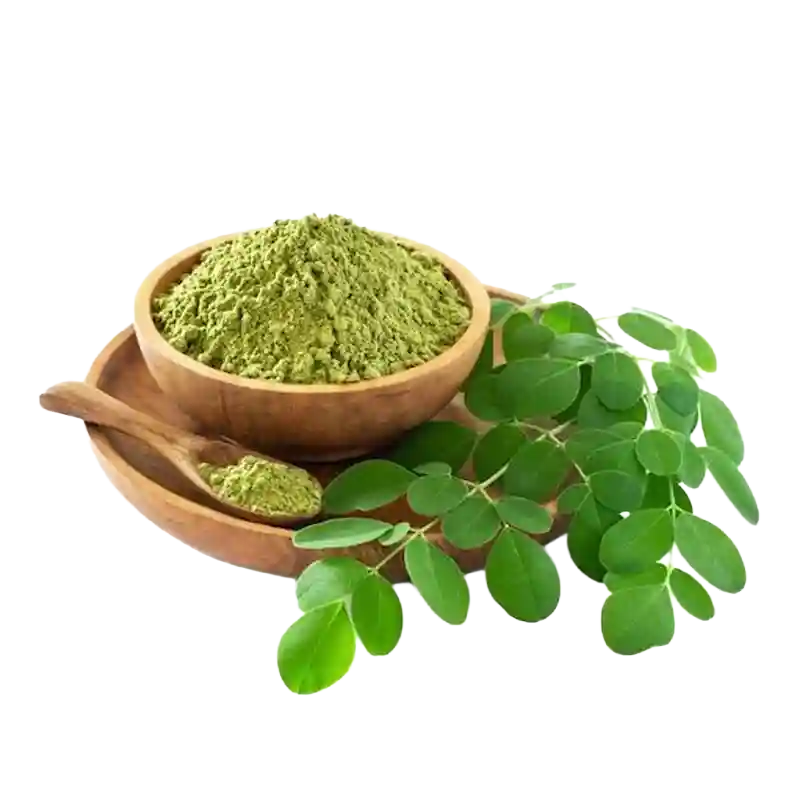
Introductionمقدّمة
Moringa is one of the most nutrient-dense plants known to science, earning the title "the miracle tree" for its extraordinary concentration of vitamins, minerals, and antioxidants in both its leaves and seeds.المورينغا من أكثر النباتات كثافةً غذائية عرفها العلم، إذ اكتسبت لقب "شجرة المعجزة" لتركيزها الاستثنائي من الفيتامينات والمعادن ومضادات الأكسدة في أوراقها وبذورها.
Categoryالفئة
• Nutritive tonic
• Anti-inflammatory
• Antioxidant
• Energising
• Immune support• مقوٍّ غذائي
• مضاد للالتهاب
• مضاد للأكسدة
• مُعطي للطاقة
• دعم المناعة
Habitatالموطن
Native to the foothills of the Himalayas in Northwest India, widely cultivated across tropical and subtropical regions of Africa, Asia, Latin America, and the Arabian Peninsula in well-drained soils with full sun.موطنها سفوح جبال الهيمالايا في شمال غرب الهند، وتُزرع على نطاق واسع في المناطق الاستوائية وشبه الاستوائية في أفريقيا وآسيا وأمريكا اللاتينية وشبه الجزيرة العربية في تربة جيدة الصرف تحت الشمس الكاملة.
Parts usedالأجزاء المستخدمة
• Fresh and dried leaves
• Leaf powder
• Seeds (whole and pressed oil)
• Seed cake (topical)
• Root bark (traditional use only)
• Pods (fresh, culinary and medicinal)• الأوراق الطازجة والمجففة
• مسحوق الأوراق
• البذور (كاملة وزيت معصور)
• كسبة البذور (موضعي)
• قشر الجذور (استخدام تقليدي فقط)
• القرون (طازجة، غذائي وطبي)
Key constituentsالمكوّنات الفعّالة
• Isothiocyanates (moringin — primary bioactive)
• Flavonoids (quercetin, kaempferol, rutin)
• Glucosinolates
• Vitamins A, B1, B2, B3, C, E, K
• Minerals (calcium, iron, potassium, magnesium, zinc)
• All 9 essential amino acids (complete protein)
• Chlorogenic acid
• Beta-carotene
• Oleic acid (seed oil — 73%)• إيزوثيوسيانات (مورينجين — المادة الفعالة الرئيسية)
• فلافونويدات (كيرسيتين، كامبفيرول، روتين)
• غلوكوسينولات
• فيتامينات A، B1، B2، B3، C، E، K
• معادن (كالسيوم، حديد، بوتاسيوم، مغنيسيوم، زنك)
• جميع الأحماض الأمينية الأساسية التسعة (بروتين كامل)
• حمض الكلوروجينيك
• بيتا كاروتين
• حمض الأوليك (زيت البذور — ٧٣٪)
Researchالأبحاث
Research on Moringa highlights its exceptional antioxidant capacity, anti-inflammatory action, and blood sugar regulation, with studies confirming its isothiocyanates as primary drivers of its antimicrobial and anti-tumour properties.تُبرز الأبحاث قدرة المورينغا الاستثنائية على مكافحة الأكسدة والالتهاب وتنظيم سكر الدم، مع دراسات تُؤكد أن الإيزوثيوسيانات هي المحرك الرئيسي لخصائصها المضادة للميكروبات والأورام.
Published researchأبحاث منشورة
↗ Effects of Moringa oleifera supplementation on immune and nutritional biomarkers in adults living with HIV: a systematic review and meta-analysis↗ Moringa oleifera Lam. in Diabetes Mellitus: A Systematic Review↗ Moringa oleifera Supplementation as a Natural Galactagogue: A Systematic Review on Its Role in Supporting Milk Volume and Prolactin LevelsTraditional useالاستخدام التقليدي
Traditionally used across South Asia, Africa, and the Middle East to treat malnutrition, low milk supply in nursing mothers, fever, joint pain, and as a general daily nutritive tonic.استُخدمت تقليدياً عبر جنوب آسيا وأفريقيا والشرق الأوسط لعلاج سوء التغذية وضعف إدرار الحليب عند المرضعات والحمى وآلام المفاصل، وكمقوٍّ غذائي يومي عام.
Current useالاستخدام الحالي
Currently used as a daily nutritional supplement, for blood sugar management, energy support, iron deficiency, inflammation, skin health, and lactation support.تُستخدم حالياً كمكمل غذائي يومي، ولإدارة سكر الدم، ودعم الطاقة، وعلاج نقص الحديد، والالتهابات، وصحة الجلد، ودعم إدرار الحليب.
Preparationsالتحضيرات
Culinary, Oil, Powder, Supplement, Whole (Fresh/Dried)زيت, طهي, كامل (طازج/مجفف), مسحوق, مكمل غذائي
Used for these conditionsيُستخدم لهذه الحالات
Adult dosageجرعة البالغين
2–6g of leaf powder daily in water, juice, or smoothie; or 1–2 fresh leaf sprigs daily; seed oil 1 tsp daily for topical or oral use.٢–٦ غرام من مسحوق الأوراق يومياً في ماء أو عصير أو عصير مخفوق؛ أو فرعان طازجان من الأوراق يومياً؛ وملعقة صغيرة من زيت البذور يومياً للاستخدام الموضعي أو الفموي.
Child dosageجرعة الأطفال
1–2g leaf powder daily mixed into food for children over 2 years; introduce gradually and observe tolerance.١–٢ غرام من مسحوق الأوراق يومياً مُمزوجاً في الطعام للأطفال فوق سنتين؛ أدخله تدريجياً وراقب التحمّل.
Cautionتحذيرات
Avoid root bark in high doses during pregnancy due to uterine stimulant effect; use with caution alongside antidiabetic and antihypertensive medications; introduce gradually as high doses may cause digestive discomfort.تجنبي قشر الجذور بجرعات عالية أثناء الحمل بسبب تأثيره المُحرِّض للرحم؛ وتوخَّ الحذر مع أدوية السكري وخافضات ضغط الدم؛ وأدخله تدريجياً إذ قد تُسبب الجرعات العالية انزعاجاً هضمياً.
Pregnancy & nursingالحمل والرضاعة
Avoid during Pregnancy/Nursingيمنع أثناء الحمل والرضاعة